
Hiking in Bas-Rhin: The 10 Most Beautiful Hiking Trails to Explore in 2026
From Rocher de Dabo to Mont Sainte-Odile, from Donon to Haut-Koenigsbourg: a curated selection of hiking trails, including distances, elevation gains, scenic viewpoints, and Club Vosgien trail markings.
Are you looking for the most beautiful hikes in the Bas-Rhin for a weekend in nature, exploring the Vosges forests, medieval castles, and panoramic viewpoints? Good news: the department is one of the most beautiful hiking destinations in the Grand Est region. In fact, nearly 3,000 km of marked hiking trails have been maintained here since 1872 by the Club Vosgien, one of Europe’s oldest hiking associations. In addition, the Bas-Rhin boasts 27 peaks over 800 meters, from the Donon to the Champ du Feu, as well as dozens of medieval castles accessible on foot, spectacular waterfalls, and the classified Alsatian vineyards.
In this guide, we share the hiking trails we recommend to our travelers. You’ll find 10 verified trails (distance, elevation gain, duration, exact trail markings, and orientation map) ranked by increasing difficulty, from family-friendly beginner routes to trails for seasoned hikers. Plus, you’ll discover our top Nexvisit accommodations conveniently located near the best trails, a detailed budget for a hiking weekend, and eight practical tips. In short, everything you need to set off on a worry-free hike in the Bas-Rhin.
Why go hiking in the Bas-Rhin?
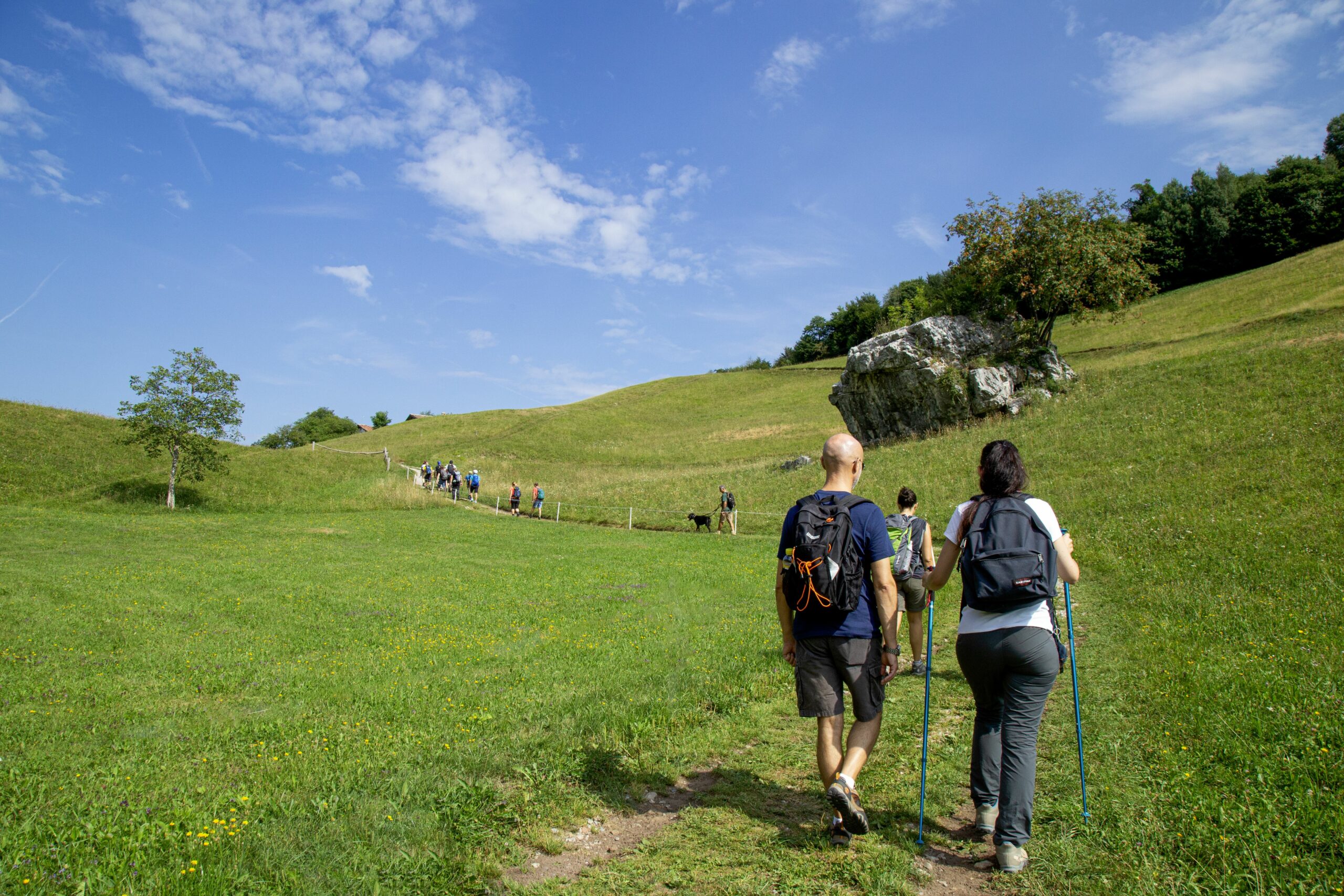
The Bas-Rhin lies at the junction of three distinct mountain ranges. As a result, in less than an hour’s drive, you can go from the Rhine Plain to the Vosges Mountains and then to the Lorraine Plateau. Consequently, few departments offer such variety within such a compact area. In our experience, this is likely the best hiking terrain in the Grand Est region, with a rare advantage: nearly all trails are marked according to the Club Vosgien standard, which is easy to follow even for occasional hikers.
A department nestled between three mountain ranges
The appeal of the Bas-Rhin lies in its unique geography. First, the Alsace Plain offers easy walks through vineyards and half-timbered villages. Next, the Vosges Mountains rise to 1,099 meters at Champ du Feu, featuring deep forests of beech and fir trees. Finally, the Lorraine plateau to the west provides access to the Northern Vosges, which are gentler but rich in ruined castles. As a result, you can experience a different atmosphere every day without leaving the department.
The Club Vosgien, responsible for trail marking
The Club Vosgien has been in existence since 1872. Today, the association maintains more than 20,000 km of trails throughout the Vosges and the Alsatian Jura. The trails are marked with paint on trees every 100 to 200 meters: a rectangle for the main trails, followed by a cross, triangle, circle, diamond, or ring for the side trails. In addition, the color indicates the general direction. So, once you understand the system, you’ll hardly ever get lost. The GR®5 and GR®53 also cross the department from north to south.
Four seasons, four atmospheres
Every season has its advantages. Spring remains the best time to visit Champ du Feu, with its daffodils and few crowds. Summer requires early starts but offers the clearest views. Fall is ideal in the vineyards around Barr and Mittelbergheim, with the colors of the harvest. Finally, winter works well on low-altitude trails. However, above 800 m, bring snowshoes: snow can block the trails from December to March.
Did you know? 7 fun facts to impress people along the way
Before we dive into the selection of hikes, here are a few true stories that bring the trails of the Bas-Rhin to life. These little historical gems really change the way you experience a place. Plus, they always make a big impression when you tell people about your hike after you get back.
🎭 Seven true stories from the trails of the Bas-Rhin
11 km The Pagan Wall, an archaeological mystery of Mont Sainte-Odile. This megalithic enclosure encircles Mont Sainte-Odile for 11 kilometers. In fact, it consists of approximately 300,000 cyclopean blocks, some weighing several tons. However, its origin and dating (Celts, Romans, or even older?) continue to divide archaeologists. In fact, blocks joined by fossilized wooden pegs can still be found there.
1,009 m The Donon, a site of Celtic and later Roman worship. The summit of the Donon is home to a Roman temple reconstructed in 1869 based on archaeological excavations. Originally, the Celts already worshipped a mountain deity there. Later, the Romans built a temple dedicated to Mercury. Thus, the summit has been a sacred site for over 2,000 years and remains one of the most historically significant places in the Vosges.
1872: The founding of the Club Vosgien and the invention of modern trail marking. The association was founded in Saverne in 1872 by a doctor named Richard Stieve. Thus, the Bas-Rhin region is one of the global birthplaces of symbol-based trail marking. In fact, this system later inspired hiking federations in Germany, Switzerland, and Italy. It is one of the most understated yet most useful legacies left to European hiking.
25 m The Nideck Waterfall, the highest waterfall in Alsace. With its 25-meter free fall into a volcanic cirque, it is the highest waterfall in the Vosges Mountains on the Alsace side. In addition, the 13th-century castle overlooking it inspired a legend later adapted by the Brothers Grimm: that of a family of giants living in the fortress. Furthermore, the flow is spectacular in the spring after the snow melts.
1798: Le Haut-Barr, France’s first optical telegraph line. In 1798, the Chappe Tower located on the Haut-Barr trail served as one of the relays for the world’s very first optical telegraph, invented by Claude Chappe. Thus, a message could travel from Paris to Strasbourg in 36 minutes via 50 visual relays. In fact, it was the digital revolution ahead of its time: the Internet via semaphore arms.
1908 Haut-Koenigsbourg was restored by Emperor Wilhelm II. After lying in ruins for two centuries, the castle was completely restored between 1900 and 1908 by German Emperor Wilhelm II, who turned it into an imperial symbol. Today, it is the second most visited monument in Alsace, with over 500,000 visitors each year. In fact, Jean Renoir filmed scenes from “La Grande Illusion” there in 1937.
1,099 m Le Champ du Feu, the highest point in the Bas-Rhin and a Nordic ski resort. At 1,099 meters, Le Champ du Feu is the highest peak in the department. However, few people know that it also features a marked cross-country skiing area. In winter, the site transforms into a cross-country skiing resort with some thirty kilometers of trails. In fact, there was even a ski lift in the 1960s before declining snowfall made it unviable.
Before you go: equipment and preparation
A little advance planning can make all the difference. While the trails in the Bas-Rhin are well-marked, some are made of slippery sandstone or rain-worn stone. Here are the key things to check off your list before you set out to ensure a worry-free hike.
Essential equipment
For a half-day hike, bring high-top hiking boots, a 20-liter backpack, 1.5 liters of water per person, energy snacks, breathable layered clothing (the weather changes quickly at high altitudes), sunscreen, and a hat in the summer. Additionally, for more challenging hikes like the Donon or Rocher de Mutzig, bring telescoping hiking poles, a first-aid kit, a headlamp, and a waterproof windbreaker. In fact, the Club Vosgien trails are often made of sandstone or forest soil, which can be slippery after rain.
Which season should I choose?
You can hike in Alsace all year round, but some seasons are more pleasant than others. First, spring (April–June) offers mild temperatures, daffodils at Champ du Feu, and fewer crowds. Next, summer (July–August) calls for early starts: set out before 9 a.m. and opt for trails through the woods. Then there’s fall (September–October), which remains the best season in the vineyards around Barr, Andlau, and Mittelbergheim. Finally, winter (November–March) requires snowshoes or crampons above 800 meters.
Useful maps and apps
The Club Vosgien publishes IGN 1:50,000 maps featuring specific trail markings, available for purchase at tourist offices and local bookstores. As for apps, Visorando offers over 200 verified routes in the department, and AllTrails and Komoot work well too. In addition, the official Club Vosgien app (iOS and Android) includes offline maps and over 20,000 km of GPS tracks. As a result, you’ll have plenty of options to choose from when planning your routes.
🟢 Easy hikes: 1 to 4 (for families)
Here are the four most accessible hikes in the selection. All can be completed in half a day, with children ages 6 and up. In addition, the elevation gain is moderate (under 300 m) and the trails are wide and well-marked.
Starting point and access
The tour departs from the church square in Dabo (Moselle, on the border with Bas-Rhin), 25 minutes from Saverne. Free parking is available in the village. The drive from Strasbourg takes about 1 hour.
The course
A family-friendly loop hike in the Northern Vosges. The trail winds through a forest of beech and fir trees, passing by a few rock formations along the way. At the summit, the Rocher de Dabo is a monolith of pink sandstone topped by a chapel dedicated to Saint Leo IX. From the overlook (664 m), enjoy views of the Alsace Plain, the Vosges Mountains, and the Lorraine Plateau.
Our advice
Suitable for children ages 6 and up. In addition, admission to the chapel is free, and it offers a sheltered spot to rest at the top. There are also several picnic areas along the trail.
Starting point and access
Parking lot at the Auberge du Nideck, on the D218 between Oberhaslach and Wangenbourg. Allow 45 minutes from Strasbourg. Parking is free but can fill up by 10:30 a.m. in the summer.
The course
The trail leads to the highest waterfall in Alsace: a 25-meter free fall into a rocky cirque. It’s well worth the detour, especially after several days of rain. The hike then climbs toward the ruins of Nideck Castle, built in the 13th century on a sandstone cliff at an elevation of 535 meters. From the keep, there is a direct view of the waterfall. The return trip takes you through the woods.
Starting point and access
Saint-Nabor parking lot (Ottrott Road) or Breitmatt parking lot. 40 minutes southwest of Strasbourg. Several possible routes from Ottrott or Obernai.
The course
The most visited pilgrimage site in Alsace, attracting over a million visitors a year. The abbey, founded in the 7th century, overlooks the plain from a rocky outcrop at an elevation of 753 meters. The loop trail from Saint-Nabor passes through the Mur Païen, an 11-kilometer-long megalithic enclosure whose origins remain a subject of debate.
Family version
The Sentier des Merveilles (6 km, 2 hours, minimal elevation gain) is perfect for families with children ages 4 and up. This way, you get to see the highlights (the abbey, lookout points, and sections of the Mur Païen) without having to walk the entire loop. Plus, the abbey has a cafeteria and a restaurant at the top.
Longer route: the Castle Loop
For experienced hikers, a 14-kilometer route with 483 meters of elevation gain takes you from Mont Sainte-Odile to the ruins of Spesbourg Castle and the Andlau Waterfall. This way, you can combine religious heritage, medieval castles, and rushing water all in one hike. Follow the red rectangle markers followed by blue cross markers.
Starting point and access
The trailhead is in Saint-Jean-Saverne, which is a 30-minute train ride from Strasbourg. It’s perfect if you want to hike without a car. It’s a 35-minute drive from Strasbourg.
The course
Loop hike in the Northern Vosges Regional Nature Park. Mont Saint-Michel (438 m) is home to a 12th-century chapel, a megalithic site known as the “Witches’ School,” and the Witches’ Hole, a rocky fissure that runs straight through the rock. From the summit, enjoy a view of the Alsace plain. Accessible year-round.
🟡 Moderate hikes: 5 to 8 (for regular hikers)
Here are four hikes that are a bit more challenging, with an elevation gain of between 260 and 363 meters. They require a good level of fitness but can still be completed in a leisurely day, with breaks.
Starting point and access
La Serva Parking Lot (Belmont) or Champ du Feu Parking Lot. 1 hour and 15 minutes from Strasbourg via Schirmeck. Several access points are available from Le Hohwald or Belmont, depending on the season.
The course
The highest peak in the Bas-Rhin at 1,099 m. The summit plateau is open, offering views that stretch all the way to the Swiss Alps on a clear day. A 21-meter-high observation tower allows visitors to climb a little higher. The loop trail winds through blueberry heaths, peat bogs, and beech forests.
In winter, it’s time for cross-country skiing
In winter, the area transforms into a cross-country skiing destination with some 30 kilometers of marked trails. Depending on snow conditions, visitors can go snowshoeing or cross-country skiing here. A longer route is available starting from Le Hohwald: 15 km / 4 hours / 520 m elevation gain.
Starting point and access
Departure from Saverne (downtown or the Haut-Barr parking lot). Saverne is a 40-minute drive from Strasbourg by train or car via the A4.
The course
Haut-Barr (458 m) is nicknamed “the Eye of Alsace”: it has watched over Saverne since the 12th century. The trail connects three medieval castles: Haut-Barr, Petit-Geroldseck, and Grand-Geroldseck. Along the way, you’ll pass the Chappe Tower (1798, an optical telegraph relay station), the Source des Pionniers, the Rocher du Brotsch, and the Table des Sorcières. The trail runs almost entirely through the woods, making it manageable even in hot weather.
Short version
If you just want to see the three castles without doing the full loop, expect a 3.2 km hike with a 2-hour duration and 150 m of elevation gain. It’s perfect for a late afternoon.
Starting point and access
Châtenois (church parking lot) or Kintzheim. Châtenois is accessible by train from Strasbourg in 35 minutes via Sélestat. Ideal for combining train travel with walking.
The course
The hike follows the GR®5 trail to the Château du Haut-Koenigsbourg (757 m), a 12th-century fortress built of pink sandstone and restored by Wilhelm II in 1908. It is the second most visited monument in Alsace, attracting more than 500,000 visitors a year. The trail winds through oak and beech forests, passing by the Kintzheim Monkey Park and the Eagle Sanctuary. It offers sweeping views of the Alsace Plain, the Black Forest, and three other castles (Ortenbourg, Ramstein, and Kintzheim).
Starting point and access
Étang du Ramsthal parking lot, 10 minutes from downtown Saverne. Free parking; rarely full, even during peak season.
The course
This hike is less crowded than the more popular ones, and that’s exactly what makes it interesting. The trail starts at the edge of Ramsthalweier, a peaceful forest pond. It climbs toward the ruins of Greifenstein Castle, a 12th-century fortress with two towers still standing. Along the way: the Saint-Vit Grotto, a 14th-century cave chapel with a rather curious little alpine garden, and the Mélanie Fountain. Panoramic view of Saverne and the Haut-Barr from the Rocher du Breitkopf.
Why we love it
This is our hidden gem. In fact, you’ll encounter about ten times fewer people here than at Mont Sainte-Odile, yet the trail is just as varied. Plus, the combination of a pond, forest, ruins, and cave offers a pleasant change from trails that are purely forested.
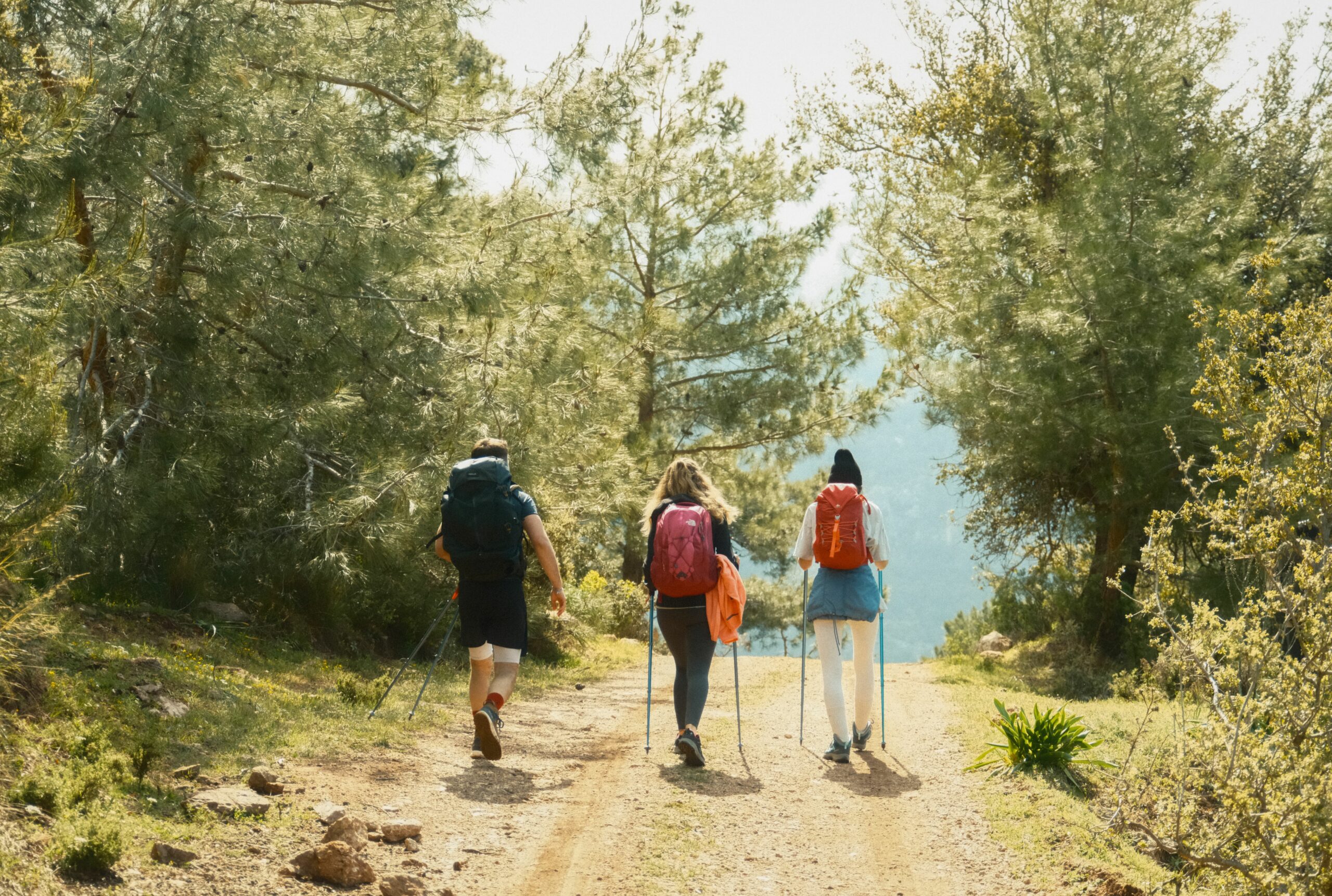
🔴 Hiking trails: 9 and 10 (for experienced hikers)
Finally, two challenging hikes that require a good level of physical fitness. They offer the most beautiful views in the department, but require a full day, the right gear, and the ability to be self-sufficient in the mountains.
Starting point and access
Col du Donon parking lot (Grandfontaine), accessible from Schirmeck via Route 392. Allow 1 hour and 30 minutes from Strasbourg. For hikers without a car, there is an alternative route starting from the Schirmeck train station.
The course
The Donon rises to 1,009 meters, tying with the Rocher de Mutzig for the title of the department’s highest peak. A site of Celtic and later Gallo-Roman worship, the summit features a Roman temple reconstructed in 1869 and dedicated to Mercury. The loop combines the Grand Donon and the Petit Donon (961 m) via the GR®5. On a clear day, you can see the Vosges, the Black Forest, and sometimes the Alps to the south.
Starting point and access
Lutzelhouse or Oberhaslach (Nideck Forest House for the long loop). Allow 1 hour from Strasbourg. Ideal to reach by train and bus from Lutzelhouse for those who are really up for it.
The course
The most challenging hike in the selection. A loop connecting Rocher de Mutzig (1,008 m) and Schneeberg (961 m), passing through the Porte de Pierre (an impressive rock formation) and the Elsassblick (“view of Alsace”). Dense forests of beech and fir trees, blocks of pink sandstone, views of the Bruche Valley, the Donon, and the Champ du Feu.
Less demanding version
For an easier route: Hike to Rocher de Mutzig from Oberhaslach (13 km / 5 hours). You’ll still reach the summit and the Porte de Pierre, but without the double loop.
Bonus: castles and vineyards within walking distance
The Bas-Rhin region is home to more than 40 ruined castles, remnants of the Alsatian Middle Ages. In addition, the Alsatian vineyards stretch along the foothills of the Vosges Mountains for 170 km. Here is our selection of short tours that combine hiking, medieval heritage, and wine tasting. All are accessible from our Nexvisit accommodations in less than 30 minutes.
The Castles of Andlau and Spesbourg
A 10.86-km loop starting in Andlau, with an elevation gain of approximately 350 meters. The hike connects two twin medieval castles perched on sandstone outcrops: Andlau Castle (13th century) and Spesbourg Castle. In fact, it is one of the most beautiful hikes in the Alsatian vineyards, offering panoramic views of the Alsace Plain and the Black Forest. Marked with red rectangles followed by yellow crosses. Allow 4 hours.
Guirbaden Castle as seen from Mollkirch
Guirbaden Castle is one of the largest fortified castles in Alsace in terms of area. A 9-km loop / 3 hours / 280 m elevation gain starting from Mollkirch. The trail winds through a magnificent beech forest before reaching the impressive 11th-century ruins. The keep offers an exceptional view of the Bruche Valley. Marked with red rectangles.
The Mittelbergheim–Zotzenberg Wine Trail
A short loop (3.5 km, 1 hour 30 minutes) through the vineyards of Zotzenberg, an Alsace Grand Cru Sylvaner. In addition, the trail passes through a classified vineyard, featuring a map and educational panels explaining the winemaker’s work. Perfect for a late afternoon stroll, ending with a tasting at a local winery. Marked with yellow rectangles.
Fleckenstein Castle (Northern Vosges)
In the northern part of the department, Fleckenstein Castle, nicknamed the “Castle of Challenges,” stands at an elevation of 370 meters. 6 km loop / 2 hrs 30 mins / 230 m elevation gain from Lembach. The 12th-century cave castle, carved into pink sandstone, now houses a fun educational trail for families. This allows you to combine hiking with a unique medieval heritage experience. Marked with red rectangles.
Where should you stay to explore the trails?
Choosing the right accommodation makes all the difference for a hiking weekend. After all, it’s better to be 20 minutes from the trails than stuck in traffic for an hour and a half on the way home. Plus, at Nexvisit, all our accommodations come with a fully equipped kitchen, hotel-quality linens, and no tourist tax. Here are three well-located options depending on the hikes you have in mind.

Cozy studio for 2 guests in Phalsbourg, at the gateway to the Northern Vosges. Convenient for exploring Dabo (20 min), Donon (30 min), and Saverne (25 min, Haut-Barr and Greifenstein). This puts you right in the heart of the department’s northern hiking trails.
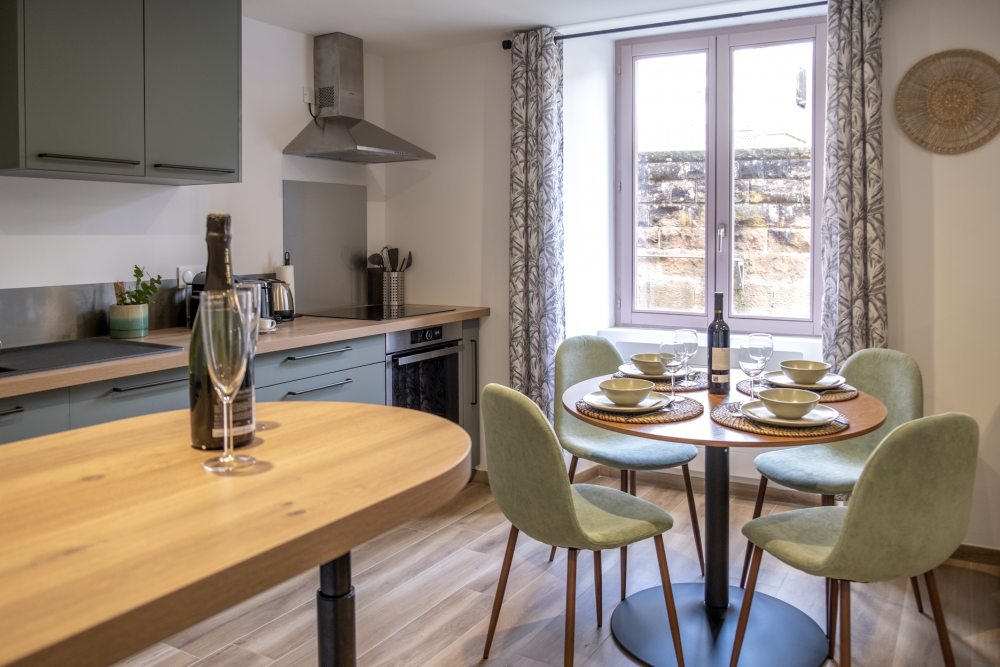
Charming apartment for 4 guests in Barr, nestled in the heart of the Alsatian vineyards. Just 15 minutes from Mont Sainte-Odile, 30 minutes from Champ du Feu, and 20 minutes from the Andlau-Mittelbergheim wine trail. Plus, the terrace is the perfect spot to relax after a hike.
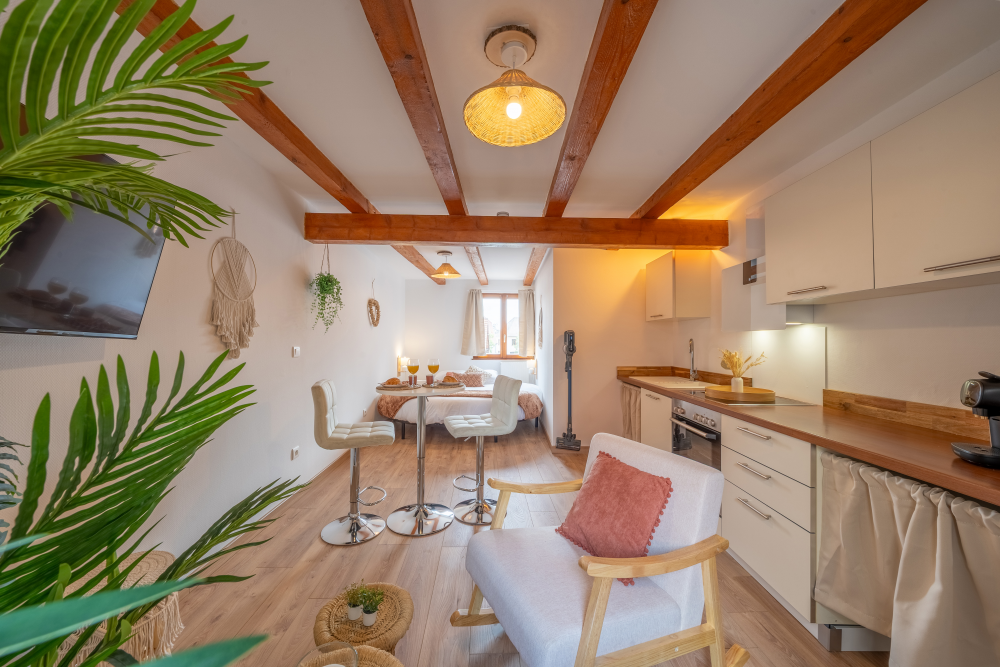
A bohemian studio for two guests in Sélestat, featuring a unique 220-cm round bed. Just 15 minutes from Haut-Koenigsbourg Castle and 25 minutes from Mont Sainte-Odile, with direct access to the GR®5 hiking trail. This makes it the perfect choice for a weekend combining hiking and cultural exploration.
Budget for a weekend hiking trip in the Bas-Rhin
Hiking remains one of the most affordable ways to explore Alsace. In fact, aside from lodging, almost everything is free: Club Vosgien trails are open to the public, parking is often free at trailheads, and you can picnic along the way. Here is our estimate per person (based on two people) for a 2-night/3-day weekend trip.
| Expense item | Economical | Comfort |
|---|---|---|
| Accommodation at Nexvisit (2 nights) | 70 € | 140 € |
| Meals and picnics | 40 € | 90 € |
| Alsatian restaurant (1 dinner) | 25 € | 50 € |
| Gasoline / Transportation | 25 € | 40 € |
| Club Vosgien Card | 10 € | 15 € |
| Souvenirs (wine, local honey) | 15 € | 40 € |
| Total per person | 185 € | 375 € |
8 Practical Tips from Local Hikers
Here are a few tried-and-true tips to help you make the most of your hikes in the Bas-Rhin. After all, these little details can make the difference between an enjoyable outing and a tiring day.
- Learn the three symbols used by the Club Vosgien. Rectangle = main trail, cross = local variant, diamond = connecting trail. With this knowledge, you’ll be able to read 80% of the trail markings in the department without hesitation.
- Leave early during peak season. At Mont Sainte-Odile and the Nideck Waterfall, the parking lots fill up by 10:30 a.m. in July and August. However, before 9 a.m., you’ll have the trails all to yourself.
- Download your maps offline. Some forested areas (Donon, Schneeberg, Champ du Feu) have limited cell service. So be sure to download Visorando or Komoot offline before you head out.
- Avoid wearing street sneakers. The sandstone trails become very slippery after it rains. Therefore, high-top shoes with Vibram soles are practically essential above 800 meters.
- Pick up everything you need for your picnic at the local market. The markets in Obernai, Barr, and Sélestat are brimming with local products. Plus, a picnic at the summit of Champ du Feu with farmhouse Munster cheese is sure to be a memorable experience.
- Enjoy a combination of train travel and hiking. Several hiking trails are accessible by train from Strasbourg: Mont Saint-Michel d’Alsace (Saint-Jean-Saverne), Haut-Koenigsbourg (Châtenois), and Haut-Barr (Saverne). This way, you can avoid the hassle of finding parking.
- Adjust the pace to suit the children. With children aged 4–6, allow twice as much time as indicated. Also, plan for regular snack breaks and set a clear goal (waterfall, ruins, summit) to keep them motivated.
- Check the mountain weather forecast. Conditions change quickly above 800 meters. Therefore, check Météo France or Mountain-Forecast the day before if you’re planning a challenging hike (Donon, Mutzig, Champ du Feu).
Frequently Asked Questions About Hiking in the Bas-Rhin
Here are the answers to the most frequently asked questions about the trails in the department.
The Sentier des Merveilles trail at Mont Sainte-Odile (6 km, 2 hours) remains the best choice: it has minimal elevation gain, a wide path, and offers the chance to visit the abbey at the summit and eat there. In addition, the Rocher de Dabo loop (5.5 km, 2 hours) is ideal for children ages 6 and up.
Le Champ du Feu, at 1,099 m. The Donon and the Rocher de Mutzig follow at 1,009 and 1,008 m. In fact, all three peaks are accessible on foot via the Club Vosgien trail markers, which is rare in France at this altitude.
Yes, with a few precautions. Low-altitude hikes (Haut-Barr, Greifenstein, Mont Saint-Michel d’Alsace) remain accessible year-round. However, at Champ du Feu and Donon, snow can block the trails from December through March: be sure to bring snowshoes or crampons. Additionally, Champ du Feu has a marked cross-country skiing area.
The Club Vosgien uses 11 geometric symbols painted on trees: rectangle (main trails), cross, triangle, circle, disc, diamond, ring, and chevron. Each symbol can be a different color (red, blue, yellow, green). The color indicates the general direction, while the symbol indicates the type of trail. Red rectangles correspond to GR® trails.
Yes. The loops around Barr, Andlau, Mittelbergheim, and Heiligenstein (7 to 15 km) pass through Grand Cru vineyards such as Kastelberg and Zotzenberg. In addition, many winemakers welcome visitors to their cellars right along the trails. The best time to visit is September–October, when the grape harvest is in full swing and the autumn colors are at their peak.
It depends on the program. For the Northern Vosges (Dabo, Donon, Saverne): Phalsbourg or Saverne, so Le Florescence. For Central Alsace (Mont Sainte-Odile, Champ du Feu, vineyards): Barr, so L’Escapade Alsacienne. For the South (Haut-Koenigsbourg, Ribeauvillé): Sélestat, so Le Céleste.
Yes, there are several hiking trails accessible by train from Strasbourg. These include the Mont Saint-Michel of Alsace (Saint-Jean-Saverne station), the Haut-Barr (Saverne station), the Haut-Koenigsbourg (Châtenois station), and the Donon (Schirmeck station + bus). This way, you avoid the hassle of parking and support sustainable transportation.
Hiking boots, a 20-liter backpack, 1.5 liters of water per person, energy snacks, breathable layered clothing, sunscreen, and a hat in the summer. Additionally, for more challenging hikes (Donon, Mutzig), bring telescoping hiking poles, a first-aid kit, a headlamp, and a waterproof windbreaker.
Spring (April–June) and fall (September–October) offer the best balance between weather and visitor numbers. Summer is still an option, but you’ll need to set out very early. Winter is fine at lower elevations, but more challenging above 800 meters.
The department has more than 40 ruined castles. The most accessible by foot are: Haut-Koenigsbourg (the most visited), Haut-Barr, Nideck Castle, the castles of Andlau and Spesbourg, Guirbaden Castle, Greifenstein Castle, and Fleckenstein Castle in the Northern Vosges. This means you can combine hiking with medieval heritage on almost every outing.
Le Champ du Feu (1,099 m) offers the widest view, with a map and a panorama stretching all the way to the Alps on a clear day. The Donon, the Rocher de Mutzig, and the Rocher du Brotsch (Haut-Barr trail) are also noteworthy. For views of the Alsatian vineyards, head to the lookout points in Spesbourg, Westhoffen, and the summit of Mont Sainte-Odile.
The Bas-Rhin remains one of the most beautiful regions in France for hiking. Indeed, its diverse terrain (the Vosges Mountains, the Alsatian vineyards, and the Northern Vosges), its reliable Club Vosgien trail markings, and its rich heritage (fortified castles, abbeys, archaeological sites, and waterfalls) make it a unique playground. Moreover, unlike other French mountain ranges, the hiking trails are accessible to all skill levels, from families just starting out to seasoned hikers.
To make the most of your hikes in the Bas-Rhin, stay at one of our accommodations conveniently located near the trails. This way, you can extend the magic of your weekend without having to deal with late-night commutes. Plus, booking directly through Nexvisit offers the best value for your money: no commission, linens included, and no tourist tax.