
The 12 Most Beautiful Villages in Alsace to Visit in 2026
Alsace is one of the few regions where every village tells a story. Indeed, the half-timbered houses, the narrow streets lined with geraniums, and the vineyards stretching as far as the eye can see create a setting that is unique in France. In fact, several towns are listed among the Most Beautiful Villages of France or have won the title of the French People’s Favorite Village. In other words, this region boasts an exceptional heritage within a relatively compact area.
This guide showcases the 12 most beautiful villages in Alsace that you simply must visit. From the Wine Route to Northern Alsace, our selection highlights the must-see towns for a memorable trip. We also recommend the best Nexvisit accommodations so you can make the most of every stop along the way. This way, you can plan your itinerary with complete peace of mind.
Why Alsace Has the Most Beautiful Villages in France
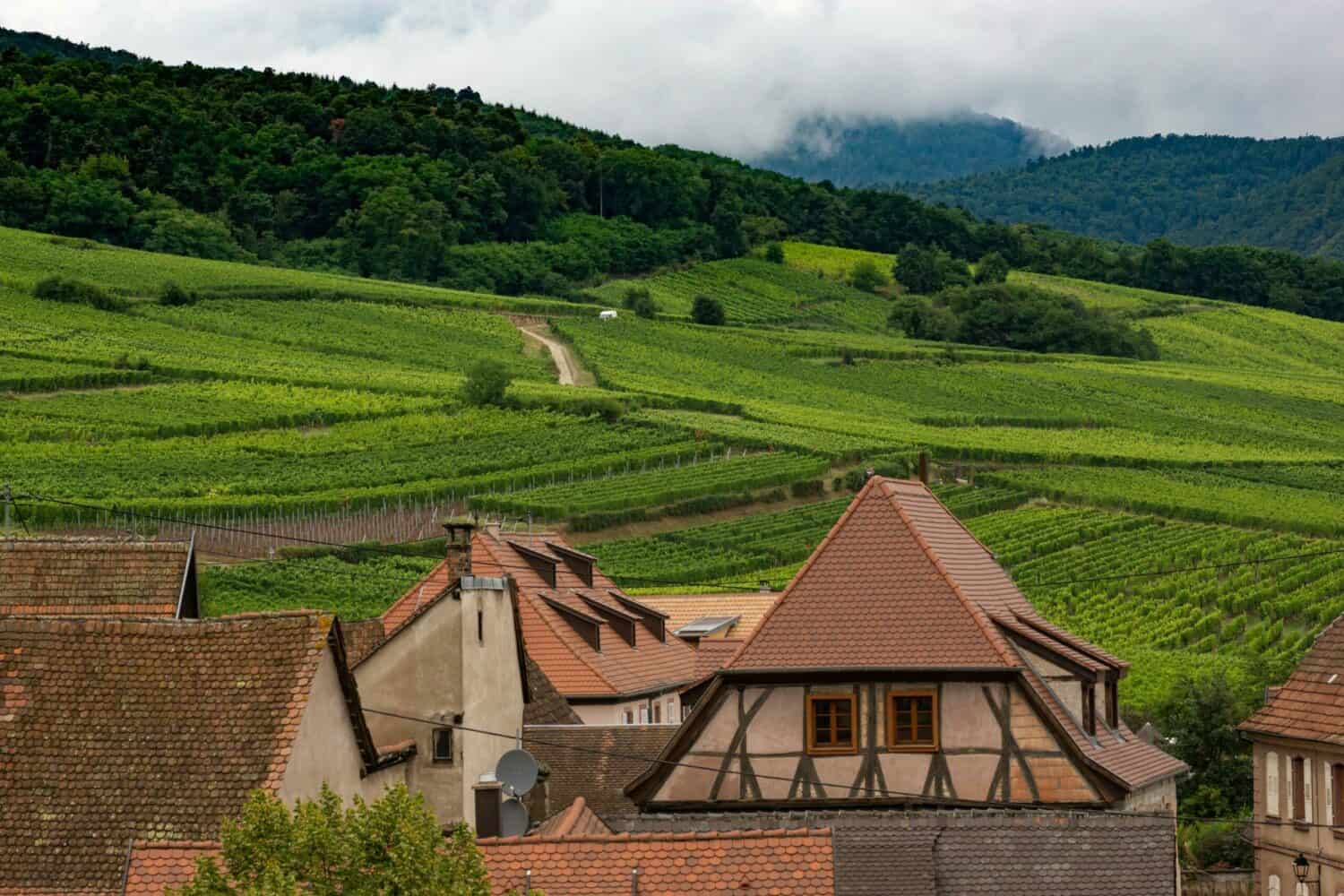
Alsatian architecture is based on half-timbering, an ancient construction technique that combines wood and cob. Indeed, every village boasts colorful facades ranging from ochre yellow to cobalt blue. Furthermore, the tradition of floral displays is deeply rooted in the local culture. Geraniums, petunias, and other flowers spill over the balconies as soon as spring arrives. This attention to detail gives Alsatian villages an incomparable charm.
Winegrowing also plays a vital role in the identity of these towns. In particular, the Alsace Wine Route passes through 120 wine-growing towns over a distance of 170 kilometers. Grand Crus, winstubs, and wine-tasting cellars are a regular part of local life. Moreover, wine culture and the built heritage form a harmonious and inseparable whole.
In addition, Alsace enjoys a unique geographical location between the Rhine Valley and the Vosges Mountains. This diversity of landscapes enhances the region’s appeal to tourists. To learn more about the region’s many attractions, visit the official Visit Alsace website. That is why millions of visitors flock to these exceptional towns every year.
What’s more, the local cuisine plays a big part in the villages’ charm. Every town has its own winstubs, artisanal bakeries, and farmers’ markets. In particular, tarte flambée, baeckeoffe, and kougelhopf are an integral part of the experience. In short, exploring the most beautiful villages of Alsace is also a culinary journey.
The villages along the Wine Route (south)
Southern Alsace is home to the region’s most iconic wine-growing villages. In fact, this stretch of the Wine Route between Colmar and Sélestat boasts an exceptional concentration of picturesque towns. What’s more, Colmar’s proximity makes it easy to visit these wine-growing gems. Here are the six must-see villages in this area.
1. Eguisheim — France’s favorite village
Eguisheim has a circular layout that is unique in Alsace. Its concentric streets wind their way around the octagonal castle of the counts. This medieval layout gives the village an incomparably intimate atmosphere. Furthermore, Eguisheim was voted France’s Favorite Village in 2013, a well-deserved honor.
Vineyards surround the village on all sides. In particular, the Eichberg and Pfersigberg Grand Crus produce exceptional wines. Moreover, the winstubs offer warm and welcoming tastings all year round. Furthermore, family-run wineries open their doors to curious visitors. Facades adorned with red geraniums complete this idyllic scene. The Eguisheim Christmas market, nestled in the winding streets, is among the most charming in the region.
2. Riquewihr — The jewel of the vineyards
Riquewihr is often considered the most beautiful wine-growing village in Alsace. Indeed, its medieval ramparts, its 13th-century Dolder Tower, and its 16th-century Renaissance houses form a remarkable ensemble. In fact, the village has been designated one of the Most Beautiful Villages of France bythe official association.
Two prestigious Grand Crus are produced on the hillsides of Riquewihr. In particular, Schoenenbourg and Sporen are among the most renowned terroirs in Alsace. Every alleyway reveals a wine cellar, an artisan workshop, or a gourmet restaurant. However, we recommend visiting early in the morning to avoid the summer crowds. In practice, arriving before 10 a.m. allows you to enjoy the atmosphere in peace.
3. Kaysersberg — The Medieval Gem
Kaysersberg was named France’s Favorite Village in 2017. That is why the village has attracted considerable attention since receiving this distinction. In addition, Kaysersberg is the birthplace of Dr. Albert Schweitzer, who was awarded the Nobel Peace Prize in 1952. The museum dedicated to him is well worth a visit.
The fortified bridge spanning the Weiss River is the village’s landmark. This medieval structure offers a magnificent view of the half-timbered houses. The ruins of the imperial castle overlook the hill and provide an exceptional panorama. Kaysersberg’s Christmas market is particularly renowned for its authenticity. For more information, check out our guide to Christmas markets.
4. Ribeauvillé — The City of Street Musicians
Ribeauvillé is known for its three fortified castles perched above the village. Indeed, the Girsberg, Saint-Ulrich, and Haut-Ribeaupierre castles majestically overlook the valley. In addition, the Pfifferdaj, a festival celebrating minstrels, carries on a musical tradition dating back to the Middle Ages. This popular festival is held every first Sunday in September.
The Ribeauvillé vineyard boasts three remarkable Grand Crus. In particular, the Geisberg, Kirchberg, and Osterberg produce Rieslings with excellent aging potential. In addition, the Grand’Rue is lined with winemakers’ houses featuring colorful facades. Thus, Ribeauvillé combines historical heritage with winemaking excellence. Furthermore, Renaissance fountains dot the village squares and add to the charm of a stroll through the town. To explore further, check out our comprehensive guide to the Wine Route.
5. Turckheim — The Village of the Night Watchman
Turckheim has a tradition that is unique in France. Every summer evening, at exactly 10 p.m., a night watchman dressed in traditional costume makes his rounds through the streets. He stops at every intersection to let out his age-old cry. That is why this village attracts visitors seeking an authentic experience.
The Porte de France marks the entrance to the fortified village. In addition, the Grand Cru Brand produces powerful, aromatic wines that are highly sought after. However, Turckheim remains less crowded than its neighbors. In other words, you’ll find a more peaceful atmosphere there. This makes it a pleasant and tranquil stop on the Wine Route.
6. Mittelbergheim — A Connoisseur's Secret
Mittelbergheim is listed among the Most Beautiful Villages of France. However, it remains far less touristy than Riquewihr or Eguisheim. Indeed, this village retains a rare authenticity that appeals to connoisseurs. Moreover, its Renaissance houses and old wine presses bear witness to a rich winemaking history.
The Zotzenberg Grand Cru is a notable exception. In particular, it is the only Grand Cru in Alsace authorized to produce Sylvaner, following the 2005 decree. As a result, wine lovers can discover a unique expression of the Alsatian terroir here. Furthermore, the village offers a welcome respite for those seeking tranquility away from the usual tourist trails.
The villages of Northern Alsace
Northern Alsace reveals a different side of the region. Here, the landscape shifts away from vineyards and into forests and rural traditions. Moreover, this area remains less frequented by mass tourism. That’s why those seeking authenticity particularly appreciate these northern villages. Here are three towns worth a visit.
7. Hunspach — The White Village
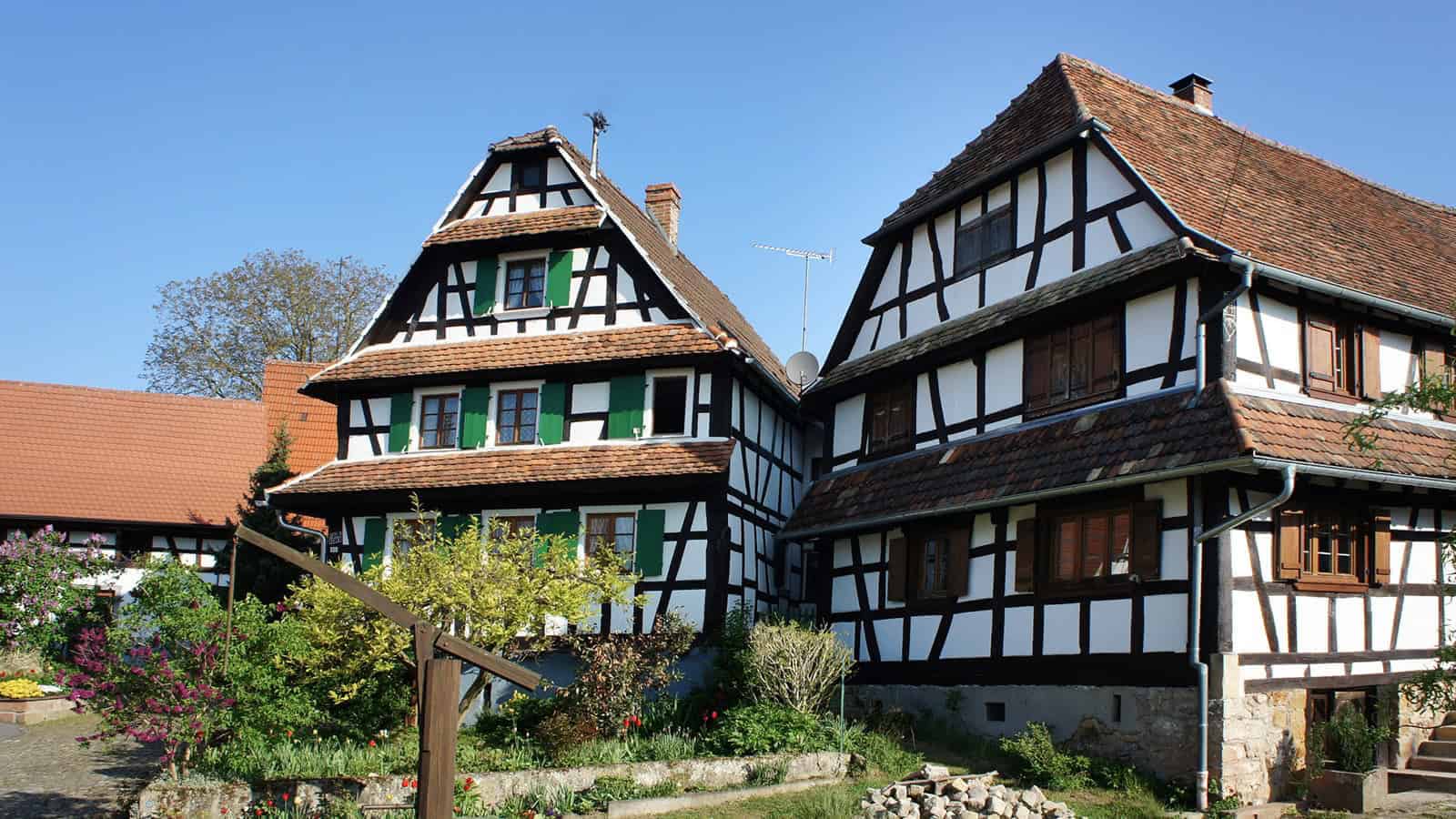
Hunspach was named France’s Favorite Village in 2020. Its white half-timbered houses stand out against the colorful facades found elsewhere in Alsace. This architectural distinctiveness gives the village a unique and instantly recognizable identity. In addition, the windows with curved glass add a touch of character to every home.
The village is located near the Maginot Line. In particular, Schoenenbourg Fort offers fascinating underground tours. In addition, marked trails allow visitors to explore the surrounding countryside on foot or by bike. As a result, Hunspach combines historic charm with outdoor activities. Check out our complete guide in the article dedicated to Hunspach and its region.
8. Wissembourg — The French-German border
Wissembourg is one of the northernmost towns in Alsace. In fact, it is located on the German border in a remarkable natural setting. Moreover, the Abbey Church of Saints Peter and Paul is one of the largest in Alsace. Furthermore, its Gothic cloister is a little-known architectural gem.
The Bruch neighborhood is often called the “Little Venice of the North.” The Lauter River flows through this picturesque neighborhood, which is lined with colorful houses. In addition, the Northern Vosges Regional Nature Park offers exceptional hiking trails. This is why Wissembourg also appeals to nature lovers and hikers. Furthermore, the weekly market features local Alsatian and German products, reflecting this unique border culture.
9. Betschdorf — The Pottery Village
Betschdorf carries on a centuries-old pottery tradition. In fact, blue-gray salt-glazed stoneware is the village’s signature craft. Moreover, pottery studios welcome curious visitors throughout the year. Additionally, the pottery museum traces the history of this local craft.
The village is located near Haguenau. In particular, the Haguenau communal forest, one of the largest in France, lies just a few kilometers away. Furthermore, the half-timbered houses in the center retain an authentic rural charm. As such, Betschdorf offers a unique cultural experience centered on traditional craftsmanship. To explore the surrounding area, check out our guide to things to do in Haguenau.
The villages at the foot of the Vosges
The foothills of the Vosges are home to villages where vineyards meet the mountains. Indeed, this geographical setting creates spectacular landscapes between the plains and the peaks. Moreover, the proximity of hiking trails enhances the tourist experience. As a result, these villages offer the perfect opportunity to combine cultural exploration with outdoor activities. Here are three towns that round out our selection.
10. Barr — A Wine-Growing Town in the Foothills
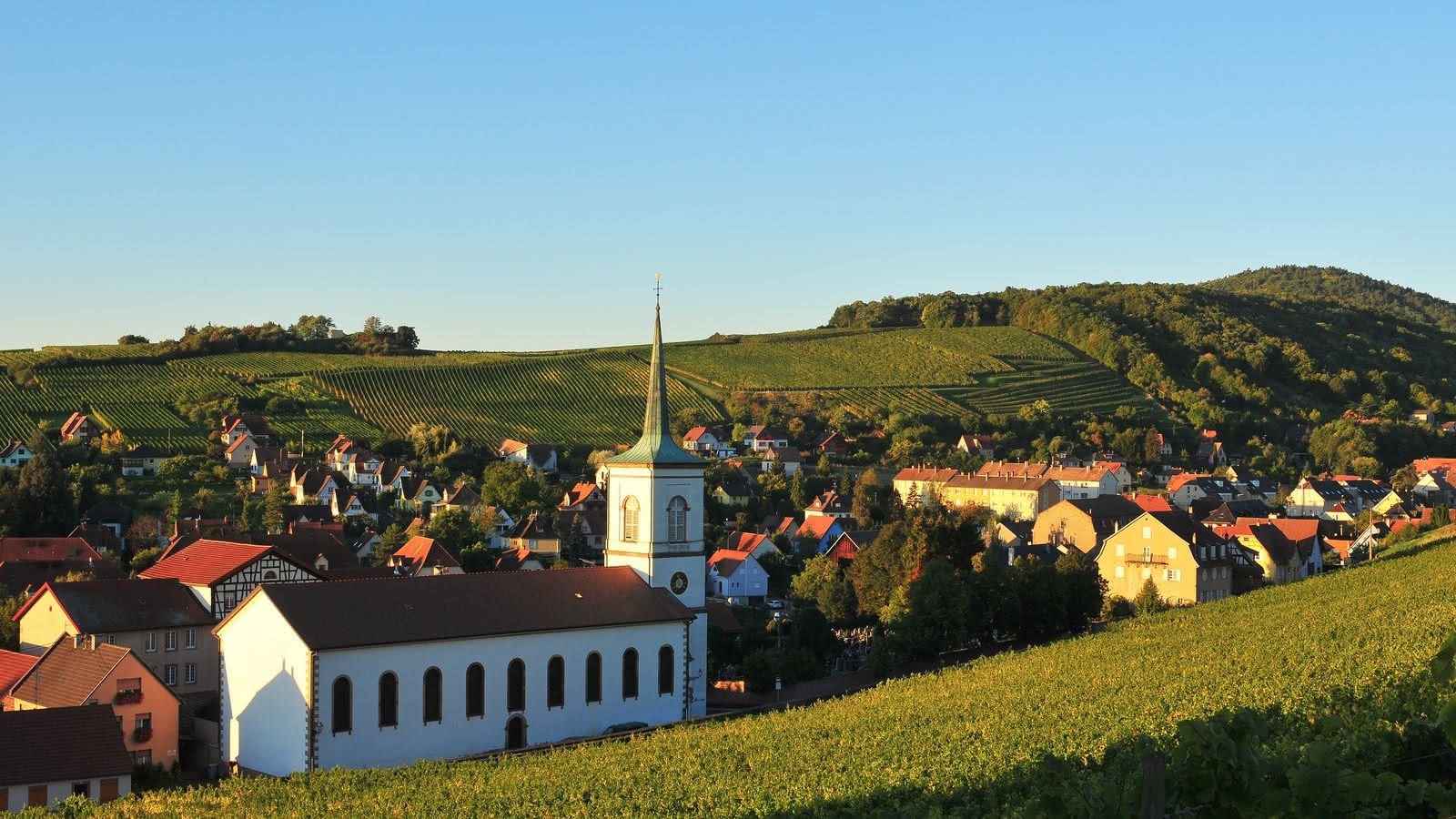
Barr is one of the most renowned wine-growing towns in the Vosges foothills and a major stop on the Alsace Wine Route. Indeed, this small wine-growing town combines architectural heritage with high-quality wine production. In addition, the grape harvest festival in October attracts thousands of visitors each year. The grape harvest trail winds its way through the vineyards on the hillsides.
The mansions in the town center are a testament to its former prosperity. In particular, the Folie Marco houses a fascinating regional museum. In addition, the marked wine trails offer remarkable views of the plain. As such, Barr is an ideal starting point for exploring the vineyards. Discover our accommodation , L’Escapade Alsacienne, in Barr.
11. Obernai — The Medieval Town
Obernai is one of the most visited towns along the Wine Route. Indeed, the Market Square, the belfry, and the ramparts form a remarkable medieval ensemble. In addition, the six-bucket well and the grain market add to its historic character. Moreover, the town has a lively atmosphere all year round thanks to its shops and restaurants.
Mont Sainte-Odile is just a 15-minute drive away. This renowned pilgrimage site offers an exceptional view of the Alsace plain. In addition, the “pagan wall”—a mysterious 11-kilometer-long megalithic enclosure—intrigues curious visitors. This is why Obernai serves as a strategic base for exploring both villages and nature. For other activities, check out our guides to Colmar and Strasbourg.
12. Bergheim — The Fortified Village
Bergheim has earned numerous accolades: named the “French People’s Favorite Village” in 2022, it was also added to the list of the “Most Beautiful Villages of France” that same year. Indeed, this medieval town stands out for its fully preserved double ring of ramparts, a rarity in Alsace. In addition, the Cour Dîmière and the Gothic church bear witness to a rich architectural heritage. Watchtowers dot the path along the walls.
Bergheim’s history includes a dark chapter linked to witch trials. In particular, a historical trail traces this period in the village. In addition, the medieval witches’ garden offers a fun and educational exploration of this era. Furthermore, Bergheim’s Grand Cru Altenberg produces exceptional local wines, renowned for their aging potential. Thus, Bergheim offers a unique blend of history and viticulture. To round out your visit, Haut-Koenigsbourg Castle is just a few minutes away.
The Fun Side: 6 Fun Facts That Will Surprise You
Beyond the usual travel guides, every village has fascinating stories to tell. In fact, Alsace is full of anecdotes that make a visit even more enjoyable. Here are six gems to slip into your conversations during your next get-together with friends.
✨ 3 Surprising Historical Facts
1002 — An Alsatian Pope in Eguisheim. Bruno of Dabo was born in the octagonal castle of Eguisheim in 1002. He went on to become pope in 1049 under the name Leo IX. In other words, Alsace gave the Catholic Church a pope—a fact that few French people are aware of today.
1875 — Albert Schweitzer is born in Kaysersberg. The future 1952 Nobel Peace Prize laureate was born on January 14, 1875, in the village parsonage. A physician, theologian, and musician, he founded the Lambaréné Hospital in Gabon. Notably, his birthplace has been turned into a fascinating museum.
1945 — Riquewihr, the “miracle village.” Unlike many Alsatian towns that were devastated during the fighting at the time of the Liberation, Riquewihr was spared from the bombing. As a result, the village has preserved its 16th-century Renaissance heritage intact—a true architectural miracle in Alsace.
🎭 3 fascinating facts and surprising statistics
8:00 p.m. sharp — The Night Watchman of Turckheim. From May 1 to October 31, every evening at 8:00 p.m., a night watchman clad in a black cape and carrying a halberd patrols Turckheim. He also sings his traditional cry throughout the village. It is the only tradition of its kind still alive in France.
Hunspach, the all-white village. While the rest of Alsace showcases its colorful facades, Hunspach stands apart. Indeed, its half-timbered houses are strictly white, without a trace of color. In particular, the windows with curved glass complete this architectural identity, which is unique in France.
Zotzenberg, the Sylvaner exception. Among the 51 Grand Crus of Alsace, Mittelbergheim’s Zotzenberg stands out as a maverick. Moreover, it is the only one authorized to produce Sylvaner as a Grand Cru since 2005. In short, it is a unique terroir that defies the tradition of noble grape varieties.
Where to stay when visiting the villages of Alsace
To fully enjoy the most beautiful villages, choosing the right accommodation is essential. A well-located rental allows you to easily explore the entire region. Nexvisit offers high-quality accommodations located at strategic points throughout the area. This way, you can visit several villages during a single trip without wasting time on the road. Plus, each property is fully equipped to ensure optimal comfort after a day of sightseeing. Check out our vacation rentals in the Bas-Rhin as well.
For the Southern Wine Route: La Maison Paisible in Zellwiller

Located in the heart of the vineyards, it’s the perfect base for visiting Eguisheim, Riquewihr, Kaysersberg, and Ribeauvillé. In fact, its central location makes it easy to explore the entire Wine Route.
For Barr and Obernai: The Alsatian Getaway
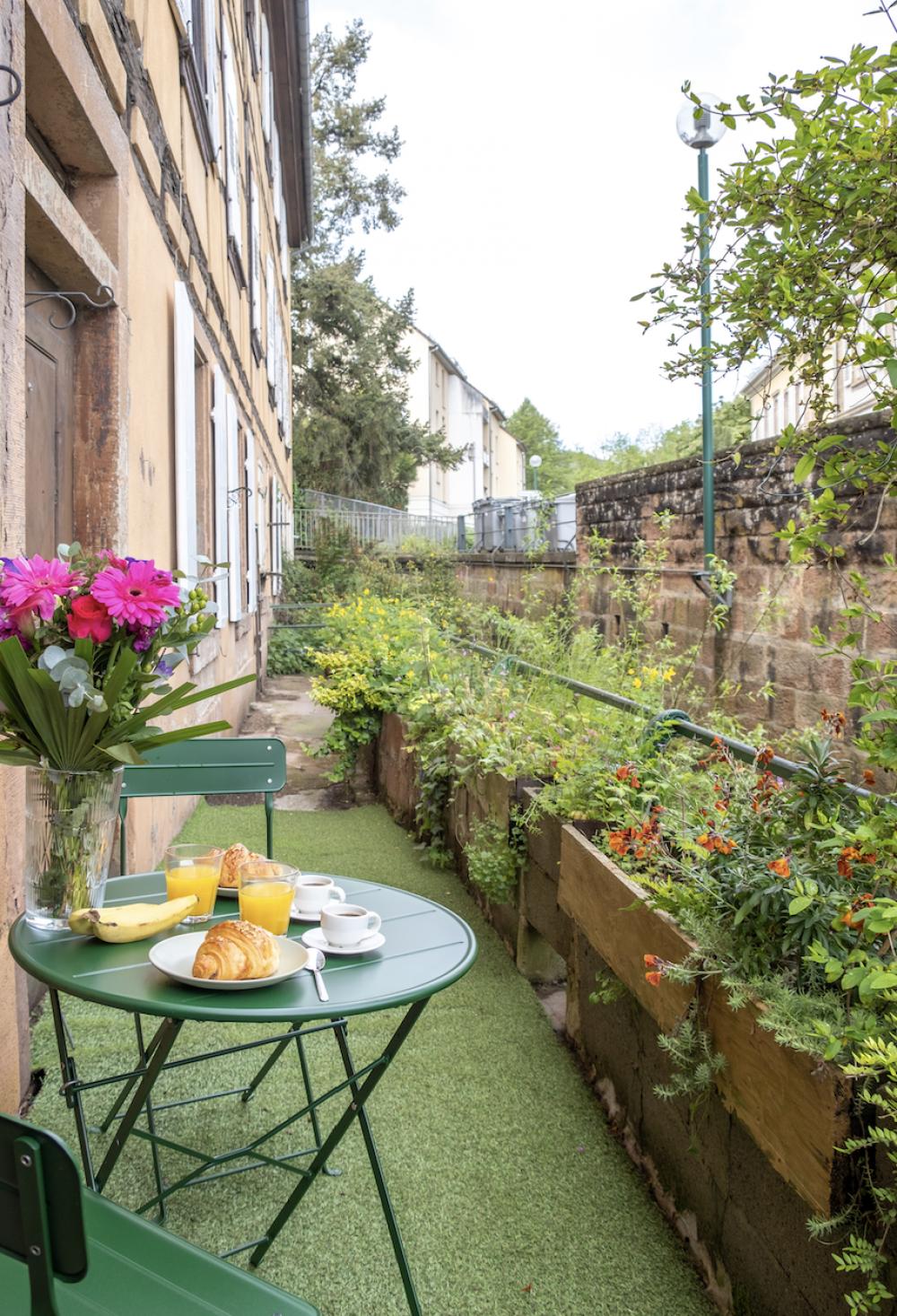
Right in the heart of Barr, an ideal starting point for exploring the villages of central Alsace. In fact, Obernai, Mittelbergheim, and Andlau are all less than 15 minutes away.
For Northern Alsace: La Maison Royale in Haguenau

The perfect base for exploring Hunspach, Wissembourg, and Betschdorf. This spacious house can accommodate up to 9 people, making it ideal for families or groups of friends.
For a romantic couple: Le Céleste in Sélestat
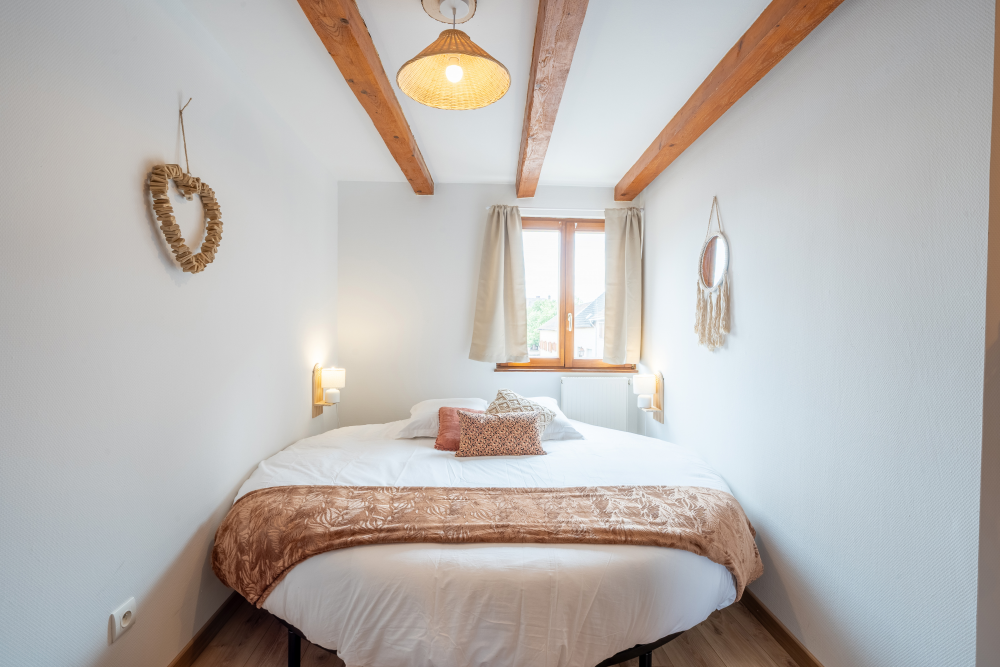
Stylish studio apartment in Sélestat, perfect for exploring Bergheim, Ribeauvillé, and Haut-Koenigsbourg. Its central location also makes it easy to visit Riquewihr and Kaysersberg.
Why book directly through Nexvisit
The benefits of booking directly
- ✅ Over 20 accommodations in Alsace, ranging from studios to large vacation rentals
- ✅ Convenient locations for exploring the villages
- ✅ Fully equipped: linens, Wi-Fi, fully equipped kitchen
- ✅ Personalized welcome and local recommendations
- ✅ Direct booking with no platform fees
When to visit the villages of Alsace
Each season brings a different atmosphere to the villages of Alsace. Indeed, the landscapes change as the months go by. In addition, cultural events punctuate the year. Here is our season-by-season breakdown to help you choose the best time to visit.
March through May
Geraniums are blooming on every balcony. Besides, the streets are quiet and the weather is pleasant. So, it’s the perfect time to photograph the villages without the summer crowds.
June through August
Festivals liven up the villages all summer long. Plus, the long days make it possible to visit several towns. In particular, the terraces at the winstubs stay open late into the evening.
September through November
The grape harvest brings the vineyard to life. The vines are ablaze with shades of gold and copper. The new wine festivals create a warm and festive atmosphere.
December through February
Christmas markets light up every village. What’s more, the magical atmosphere attracts visitors from all over the world. And mulled wine and bredele add to the winter magic.
However, fall remains our favorite season at Nexvisit. In particular, the stunning colors of the vineyards and the grape harvest festivals create a magical atmosphere. Moreover, the golden and copper-colored vines offer an unparalleled visual spectacle from the vineyard trails. Plus, prices are lower and the villages are less crowded than in summer. That’s why we especially recommend September and October for your stay.
In winter, Alsace’s Christmas markets transform every village into a magical wonderland. The wooden chalets, festive lights, and the aroma of mulled wine create a truly unique atmosphere. Additionally, the villages are less crowded on weekdays than on weekends. So, if possible, plan your visit for Monday through Thursday. For a family vacation, check out our guide to Alsace for families.
Frequently Asked Questions About the Villages of Alsace
What are the most beautiful villages in Alsace?
The most famous villages are Eguisheim, Riquewihr, Kaysersberg, Hunspach, and Bergheim. In fact, these towns have received prestigious national awards. However, Mittelbergheim, Ribeauvillé, and Turckheim are just as worth a visit for their well-preserved authenticity. Moreover, these less-visited villages offer a more intimate experience.
Is it possible to visit the villages of Alsace in a single day?
It is possible to visit two or three villages in a single day. However, we recommend staying for at least three to four days. Each village is worth spending at least one to two hours exploring. Taking things at a slower pace allows you to enjoy the wineries, restaurants, and local atmosphere.
How do you get around between the villages?
The car remains the most convenient way to travel between the villages. The distances are short—often less than 15 minutes between each town. In addition, tourist shuttles run along the Wine Route during the season. Electric bikes are also a pleasant and active alternative.
Are the villages accessible without a car?
Some villages are accessible by train or bus. In particular, Obernai, Barr, Sélestat, and Wissembourg have train stations. However, more remote villages such as Hunspach and Mittelbergheim require a car. Car rental services are available in the main towns.
Which village should you visit first with kids?
Eguisheim and Kaysersberg are particularly family-friendly. Their compact size makes them ideal for young walkers. Plus, the animal sculptures on the facades are sure to entertain the kids. Ribeauvillé also offers a fun-filled trail and playgrounds. Check out our guide to family-friendly Alsace for more ideas.
Where should I stay if I want to visit several villages?
For the villages in the south (Eguisheim, Riquewihr, Kaysersberg), accommodation between Colmar and Sélestat is ideal. In particular, our Maison Paisible in Zellwiller offers a central location. For Northern Alsace, the Maison Royale in Haguenau is the perfect base. Discover all our Nexvisit accommodations.
How many villages in Alsace are listed as “Most Beautiful Villages of France”?
Five Alsatian towns hold the official designation: Eguisheim, Hunawihr, Mittelbergheim, Riquewihr, and Bergheim. In addition, four Alsatian villages have won the title of “France’s Favorite Village”: Eguisheim in 2013, Kaysersberg in 2017, Hunspach in 2020, and Bergheim in 2022. As a result, Alsace boasts a rare concentration of heritage distinctions.