
Visiting Haut-Koenigsbourg: Complete Guide 2026
Perched at an altitude of 757 meters, Haut-Koenigsbourg Castle proudly overlooks the Alsace plain. On a clear day, the view stretches all the way to the Black Forest, the Vosges Mountains, and sometimes even the Alps. Indeed, this medieval fortress, restored by Kaiser Wilhelm II, remains the most visited monument in the region to this day. In short, if you’re planning a trip to Alsace, you simply can’t miss it.
What’s more, the castle is located at the crossroads of Alsace’s major destinations. From Strasbourg, it’s just a 55-minute drive. Colmar is 25 minutes to the south, and Sélestat is 20 minutes down the hill. That’s why we’ve put together this handy guide: 2026 admission prices, hours, directions, history, interesting facts, and nearby accommodations. Also check out our accommodations in Alsace to extend your getaway at the foot of the fortress.
Why visit Haut-Koenigsbourg?

Haut-Koenigsbourg attracts more than 500,000 visitors each year, and this success is no accident. Indeed, the castle boasts a collection of features rarely found in a single location. Its history spans nine centuries of European history. Moreover, its spectacular early20th-century restoration offers a unique, almost lifelike glimpse into medieval life.
A fully restored medieval fortress
Unlike most castles in Alsace, Haut-Koenigsbourg is not just a ruin to admire. Here, you’ll find furnished rooms, working fireplaces, and collections of authentic weapons. Moreover, the keep, the banquet hall, and the armory transport you straight back to the atmosphere ofthe 15th century. To be honest, it’s a bit like visiting an Alsatian version of Hogwarts.
An exceptional view of the Alsace Plain
From the ramparts, the view takes in the entire expanse of the Alsace plain. However, it is on a clear day that the scene becomes truly magical. First, the peaks of Germany’s Black Forest stand out to the east. Then, the Vosges mountains stretch their wooded ridges to the west. Finally, on exceptionally clear days, the Alps appear on the southern horizon. You certainly won’t regret the climb.
An easy trip from anywhere in Alsace
Unlike many castles in the Vosges, Haut-Koenigsbourg is easy to reach without too much effort. Sure, there’s a bit of a walk uphill from the parking lot. However, the road takes you almost all the way to the top. Plus, a seasonal shuttle runs to the castle from the Sélestat train station. So even without a car, you can get there easily. Check the castle’s official website for the latest information.
Did you know? 7 unusual facts about the castle
Before we get into the heart of the matter, here are a few historical tidbits that will make your visit much more enjoyable. Behind these thick walls lie stories that are sometimes surprising and sometimes touching. Plus, these verified anecdotes will make you the star of the family guided tour.
🎭 Seven true stories we often forget to tell
1633: 52 days of siege before the fall. During the Thirty Years' War, Swedish troops besieged the fortress for 52 full days. Finally, after this fierce resistance, the castle was captured, burned, and looted. It then lay in ruins for more than two and a half centuries.
In 1865, Sélestat purchased the ruins for a handful of francs. The town of Sélestat bought the site in 1865, even before the German annexation. However, it lacked the funds to restore it. In fact, it was this providential purchase that saved everything thirty years later.
1903 A private train station built for the Kaiser. Wilhelm II came to inspect the construction site every year. Consequently, a small station dedicated to Saint Hippolyte was built for him in 1903. The emperor would arrive with his entourage in grand style, then ride up to the castle in a horse-drawn carriage.
1908 An Inauguration in the Pouring Rain. On May 13, 1908, 500 people dressed in Renaissance costumes paraded for the official inauguration. Unfortunately, the Alsatian weather decided to crash the party. In fact, the entire ceremony took place in torrential rain, with everyone’s costumes soaked through.
1918 “Ich habe es nicht gewollt” — the Kaiser’s enigmatic words. During his last visit in April 1918, Wilhelm II had an inscription engraved on the fireplace in the Knights’ Hall: “Ich habe es nicht gewollt” (“I did not want it”). Indeed, this phrase is often interpreted as a belated confession regarding World War I.
In 1937, Jean Renoir filmed *La Grande Illusion* there. The castle served as the setting for the fictional fortress “Wintersborn” in this masterpiece of French cinema. Jean Gabin and Pierre Fresnay walked its ramparts in front of Jean Renoir’s camera during the winter of 1936–37. Moreover, the film is now considered one of the greatest ever made.
2026 A lost twin in Malaysia. A full-scale replica of the castle stands in Berjaya Hills, 60 km from Kuala Lumpur. Surprising, isn’t it? In fact, this architectural curiosity attracts tourists from all over the world every year, from the other side of the globe.
History of the Castle: 900 Years of Adventures
Haut-Koenigsbourg has a particularly eventful history. Indeed, few castles have endured so many trials, periods of neglect, and revivals. From its medieval construction to its imperial restoration, every era has left its mark on the castle.
Medieval origins (12th century)
As early as 774, a document from Charlemagne mentions the site under the name “Stofenberk.” However, it was in 1147 that the Hohenstaufen dynasty had a true fortress built there. As a result, the castle quickly came to control the routes for wine, grain, and silver. Furthermore, the imperial family turned it into a major strategic stronghold on the Rhine plain.
A succession of lords
Over the centuries, the castle changed hands many times. In particular, the lords of Thierstein, followed by the Habsburgs, successively became its rulers. In addition, a band of knight-bandits even occupied it temporarily inthe 15th century. Nevertheless, the fortress remained a key strategic point in the region.
Destruction and Oblivion (17th century)
The Thirty Years' War ravaged Alsace between 1618 and 1648. In 1633, Swedish troops laid siege to the castle. At first, the garrison put up a brave resistance. Then, after 52 days of fighting, the fortress fell. Finally, a fire raged for several days, and nothing could be saved.
Two centuries of neglect
For 250 years, the ruins were left to the elements. As a result, vegetation overtook the walls. Furthermore, residents of nearby villages took stones from the site for their own construction projects. In short, the castle seemed destined to disappear without a trace. Fortunately, the town of Sélestat purchased the ruins in 1865, in a move that would prove decisive.
The Imperial Renaissance (1899–1908)
By 1899, Alsace had been part of the German Empire for nearly thirty years. Consequently, the town of Sélestat presented the ruins to Kaiser Wilhelm II. The emperor immediately decided to undertake a complete restoration. He entrusted the project to the Berlin architect Bodo Ebhardt, a renowned specialist in medieval fortresses.
Seven years of a massive construction project
The work spanned seven intensive years, from 1901 to 1908. Furthermore, Ebhardt relied on extensive archaeological research for every detail. In fact, he devised a clever system: each replaced stone block was given a distinctive carved mark. Thus, even today, one can tell the old from the new at a glance. Indeed, this architectural transparency was extremely rare for the time.
The Return to France
After World War I, the Treaty of Versailles returned Alsace to France. Consequently, the castle became the property of the French government in 1919. Since 2007, it has been managed by the Bas-Rhin Department, and is now administered by the European Community of Alsace. Notably, it has been designated a historic monument since 1862.
What is there to see and do at the castle?
A visit to Haut-Koenigsbourg offers a complete immersion in the Middle Ages. The tour takes you through furnished rooms, ramparts, and reconstructed gardens. Allow between 1.5 and 2 hours for a thorough visit. However, history buffs can easily spend half a day there.
The Grand Bastion and the parapet walk
The Grand Bastion greets visitors right at the entrance. This imposing defensive structure is striking for its sheer size and architecture. Next, the parapet walk offers a scenic stroll along the ramparts. What’s more, the sweeping views of the plain are absolutely breathtaking. In fact, it’s a real treat even before you step inside the halls.
The dungeon and the furnished rooms
The keep is the beating heart of the fortress. In particular, it houses the Kaiser’s Hall, richly decorated with murals painted during the restoration. In addition, the banquet hall faithfully recreates the atmosphere of medieval feasts. Finally, the collections of weapons, armor, and crossbows fascinate visitors of all ages. In fact, children love identifying the different pieces.
Authentic furniture
Unlike many castle museums, Haut-Koenigsbourg features period furniture that is actually placed in the rooms. Thus, four-poster beds, carved chests, tapestries, and pewter tableware are displayed in their original settings. In fact, this immersive museum layout completely transforms the visitor experience.
Gardens and Outdoor Spaces
The medieval garden faithfully recreates the plantings of the period. Here you’ll find aromatic and medicinal plants cultivated during the Middle Ages. It’s also a peaceful spot, perfect for a break away from the crowds. In addition, each of the bastions offers a unique view: the northern one looks toward Sélestat, while the southern one opens up to the Vosges Mountains.
Events and Activities
The castle regularly hosts medieval events throughout the year. In particular, jousting tournaments take place during the summer. In addition, historical reenactments transport visitors back to the atmosphere ofthe 15th century. In December, the fortress is decked out for Christmas, and the winter atmosphere becomes magical.
In addition, the Volerie des Aigles, located nearby in Kintzheim, offers shows featuring birds of prey in flight. Finally, the nearby Montagne des Singes is the perfect way to round out a family day out.
Practical information: prices, hours, directions
Here is all the information you need to plan your visit with confidence. A little advance planning goes a long way toward avoiding unpleasant surprises. We also strongly recommend arriving early in the morning to enjoy the castle before the crowds arrive.
2026 Opening Hours
Hours vary by season, as the castle adjusts to the amount of daylight. Here are the full details by season. However, last admission is always one hour before closing.
| Period | Tuesday through Sunday | Monday |
|---|---|---|
| January–March | 9:30 a.m. — 5:00 p.m. | 10:30 a.m. — 5:00 p.m. |
| April–June | 9:30 a.m. — 6:00 p.m. | 10:30 a.m. — 6:00 p.m. |
| July–August | 9:00 a.m. — 7:00 p.m. | 10:30 a.m. — 7:00 p.m. |
| September–October | 9:30 a.m. — 6:00 p.m. | 10:30 a.m. — 6:00 p.m. |
| November–December | 9:30 a.m. — 5:00 p.m. | 10:30 a.m. — 5:00 p.m. |
Closed Days
The castle is closed every year on January1, December 25, and December 26. In addition, there may be occasional closures for maintenance. Therefore, please always check the official calendar before your visit.
2026 Rates
The prices are reasonable given the quality of the tour. In addition, several free options make it possible to visit without spending any money. Here is the complete price list in effect for 2026.
| Category | Rates |
|---|---|
| Full adult fare | 12 € |
| Children and teens ages 6–17 | 8 € |
| Under 6 years old | Free |
| Audio guide (optional) | + 4 € |
| First Sunday of the month (Nov. through March) | Free for everyone |
| European Heritage Days | Free for everyone |
Online ticket sales are recommended
During peak season, the castle can reach capacity several hours before arrival. Therefore, we strongly recommend that you book your time slot online. In fact, the official ticket office allows you to choose your exact time and avoid the lines.
How to get to the castle
The castle is located in the town of Orschwiller, between Sélestat and Saint-Hippolyte. There are several ways to get there, so everyone can choose the mode of transportation that suits them best.
By car
There is a paid parking lot at the top, managed by the castle. From there, it’s a 15-minute walk to the entrance. From Strasbourg, the drive takes about 55 minutes via the A35, then take the Sélestat exit. From Colmar, it’s only a 25-minute drive via the D83. Additionally, your GPS will guide you right up to the last turn without any trouble.
By shuttle bus from Sélestat
A seasonal shuttle runs between the Sélestat train station and the castle, with stops along the way. This service operates from April through November, on weekends and holidays. It’s the perfect solution if you’re traveling without a car. Check with Sélestat Tourisme for the latest schedule.
On foot from the plain
Several hiking trails lead to the castle from the valley. In particular, the GR5 trail runs right nearby. In addition, the trail from Saint-Hippolyte offers a gradual ascent through the Vosges forest. However, experienced hikers should allow about 2 hours for the hike.
What is there to do near Haut-Koenigsbourg?
The area immediately surrounding the castle is full of hidden gems. In fact, the region offers a blend of culture, nature, and fine dining all within a very small area. Here are the must-see attractions you should definitely include in your visit.
Sélestat, a cultural town at the foot of the castle
Sélestat is located just 20 minutes from Haut-Koenigsbourg. This medieval town is home to a UNESCO-listed treasure: its Humanist Library, which houses priceless15th-century manuscripts.
In addition, the historic center charms visitors with its quaint narrow streets. Furthermore, its Romanesque and Gothic churches bear witness to the city’s rich past. It was also in Sélestat that the world’s first decorated Christmas tree was documented, as early as 1521. Discover Le Céleste in Sélestat, our romantic studio just a stone’s throw from the center.
Monkey Mountain and Eagle Aviary
In Kintzheim, two wildlife parks are the perfect complement to a visit to the castle. First, the Montagne des Singes is home to more than 200 Barbary macaques living in semi-freedom. Visitors walk through the forest surrounded by the monkeys, feeding them plain popcorn. It’s an experience that delights visitors of all ages.
Next, the Volerie des Aigles offers demonstrations featuring birds of prey in the ruins of Kintzheim Castle. Eagles, falcons, and vultures fly just a few meters above the spectators. In short, it’s an unforgettable experience for the whole family.
Wine Route: Ribeauvillé, Riquewihr, Bergheim
Haut-Koenigsbourg overlooks the Alsace Wine Route. As a result, the wine-growing villages are just a few minutes away. First, Ribeauvillé charms visitors with its three ruined castles and wine-tasting cellars. Next, Riquewihr is considered the absolute gem of the Alsatian wine region. Furthermore, Bergheim stands out for its intact medieval ramparts.
However, each village has its own unique character. What’s more, tastings of Riesling and Gewürztraminer provide a pleasant break during the walk. In fact, many winemakers welcome visitors for a tour of their cellars upon request.
Cigoland and NaturOparC
Families will enjoy these two theme parks near the castle. In particular, Cigoland in Kintzheim combines rides with a stork sanctuary. Additionally, NaturOparC in Hunawihr is dedicated to protecting local species such as the otter and the Alsatian hamster. Check out our guide to family-friendly activities in Alsace for more ideas on things to do, as well as our vacation rentals in the Bas-Rhin.
Where can I stay near Haut-Koenigsbourg?
All of our accommodations near the castle are available for direct booking. This means you’ll enjoy commission-free rates and hotel-quality services. Plus, linens are provided and the visitor’s tax is included. See all our accommodations in Alsace.
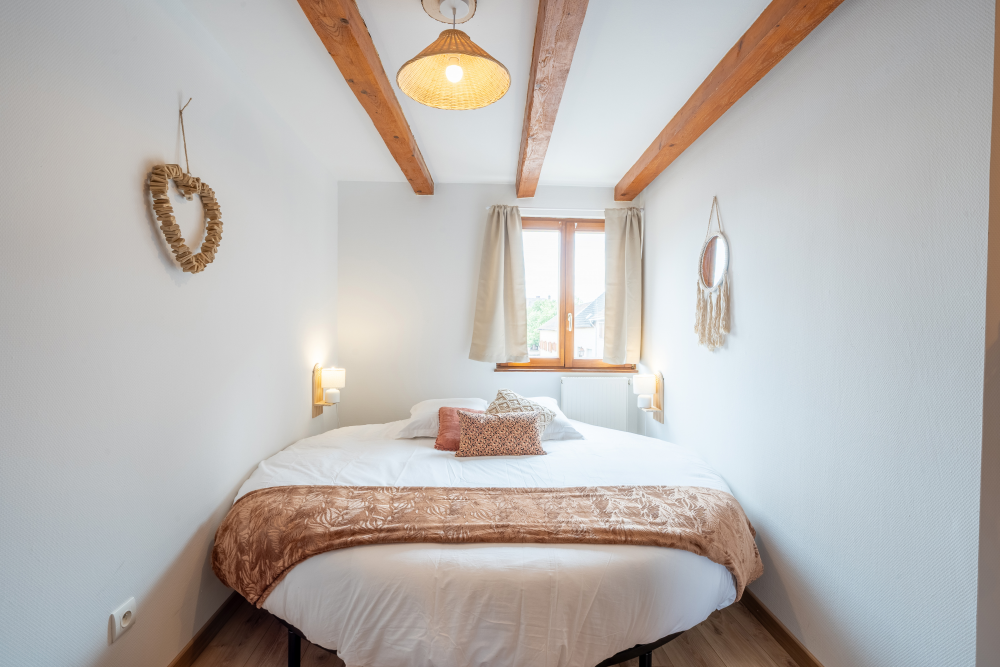
An elegant studio in the heart of Sélestat, featuring a 220-cm round bed that creates a unique atmosphere. Plus, its central location makes it easy to combine a visit to the castle with an exploration of the Humanist Library.

Spacious house with a private garden, perfect for families or groups of friends. Plus, its location between Strasbourg and Colmar offers easy access to Haut-Koenigsbourg Castle and the Wine Route.
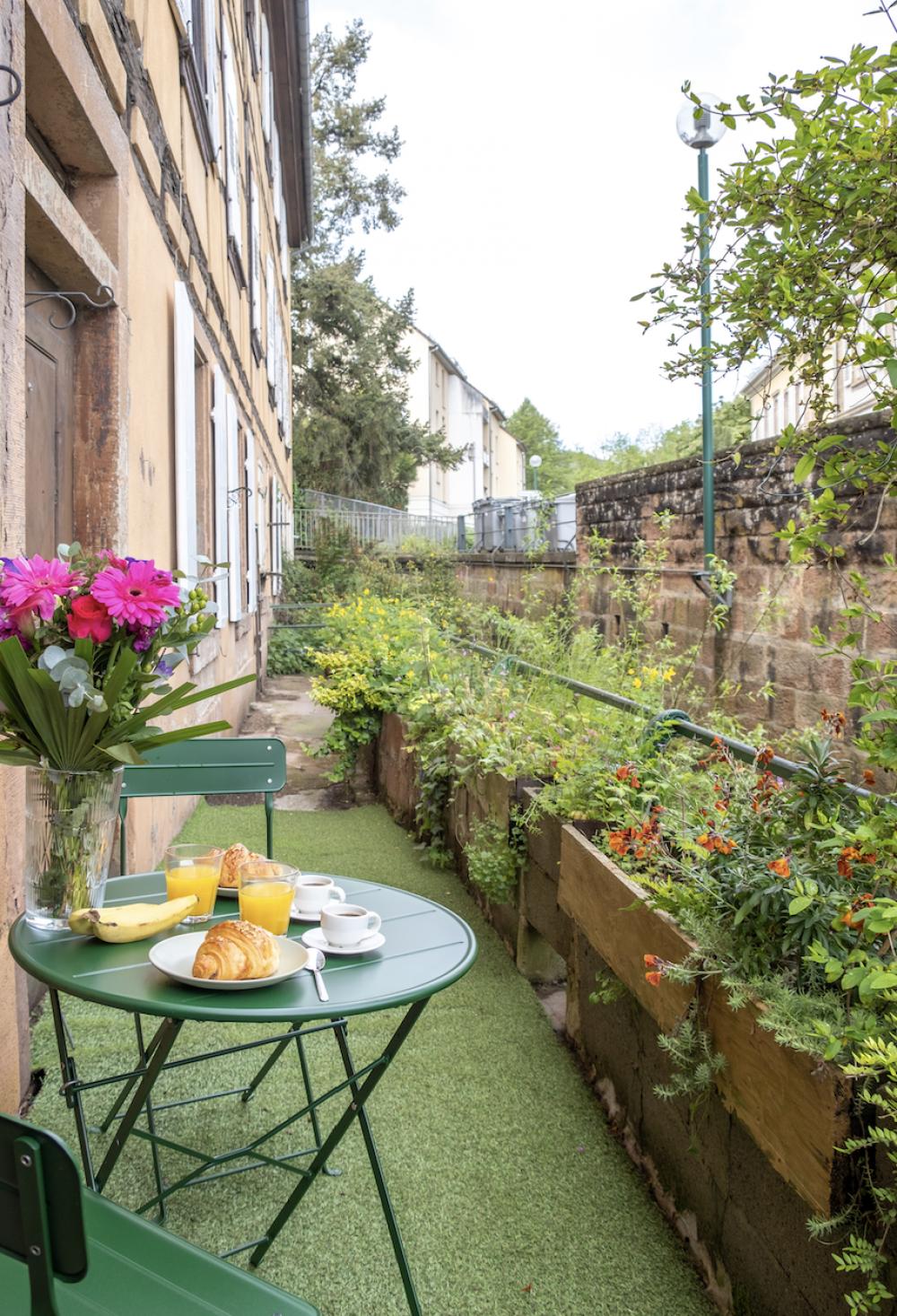
A cozy apartment in the heart of Barr, a charming wine-growing town. The apartment is also located 35 minutes from Haut-Koenigsbourg and at the start of the Alsace Wine Route.
When is the best time to visit Haut-Koenigsbourg?
The castle is open to visitors almost year-round. However, each season offers a completely different experience. Here’s our guide to help you choose the perfect time to visit based on your preferences.
March through May — Mild temperatures and moderate crowds. Plus, the forest trails are covered in flowers. Ideal for combining a visit to a castle with hiking in the Vosges.
June through August — Long days and medieval festivals. However, arrive early in the morning to avoid the summer crowds. Outdoor events bring the castle to life.
Sept. through Nov. — Golden vineyards along the Wine Route. Plus, the low-angle sunlight makes the ramparts look even more stunning. The perfect season.
Dec. through Feb. — Snow is possible during this time, creating a magical atmosphere. Plus, the Christmas markets are nearby. Very few crowds.
10 Practical Tips for a Successful Visit
Here are a few handy tips to help you make the most of your visit. After all, regular visitors to the castle know a few little tricks that make all the difference. Here are our recommendations, tried and tested.
Before you arrive
- Book online. During peak season, time slots fill up fast. Plus, buying tickets through the official website lets you skip the line at the entrance.
- Check the weather. On a clear day, the view is twice as good. However, even in the mist, the tour of the rooms is still wonderful.
- Be sure to wear sturdy shoes. Medieval floors can be uneven, and the walk up from the parking lot is on a gravel path.
- Plan on spending at least two hours there. That way, you’ll have time to see everything without rushing from one room to the next.
- Bring some water. In the summer, the final climb can make you thirsty. There’s also a cafeteria at the entrance.
During and after the visit
- Start with the ramparts. Then, spend the afternoon exploring the interior rooms as the light fades outside.
- Look for the Ebhardt markings. In fact, it’s a great little game for kids: spotting the restored stones.
- Pick up the audio guide. It provides a wealth of additional historical information for just a few extra euros.
- Combine this with a visit to the Volerie des Aigles. In fact, the two sites are just 10 minutes apart.
- Have lunch in Sélestat or Ribeauvillé. The winstubs there serve authentic traditional Alsatian dishes.
Frequently Asked Questions
Find answers to the most frequently asked questions about visiting Haut-Koenigsbourg. These are the questions visitors regularly ask us before their visit.
Allow between 1.5 and 2 hours for a full tour of the castle. The tour takes you through the furnished rooms, the keep, the ramparts, and the gardens. However, be sure to set aside extra time to enjoy the view from the ramparts, especially on a clear day.
The full adult admission price is €12. Children aged 6 to 17 pay €8, and admission is free for children under 6. In addition, admission to the castle is free on the first Sunday of every month from November through March, as well as during European Heritage Days.
Absolutely. Children love exploring the ramparts, towers, and armor collections. Plus, there are interactive exhibits throughout the tour. The nearby Monkey Mountain and Eagle Park are the perfect way to round out a family day out. See our guide to family-friendly activities in Alsace.
Yes, there is a paid parking lot at the top of the mountain. It’s about a 15-minute walk from the parking lot to the castle entrance. However, during peak season, the parking lot can fill up by midday. Arrive before 10 a.m. to find a spot easily.
Yes. A seasonal shuttle runs between the Sélestat train station and the castle from April through November. It also operates on weekends and holidays. For specific schedules and fares, please contact Sélestat Tourisme.
Yes, Haut-Koenigsbourg is open year-round. However, it is closed on January1 and December 25 and 26. Additionally, opening hours vary by season. Please check the official website for the most up-to-date information.
Access is partially available. The path between the parking lot and the entrance is steep and rocky. In addition, there are many stairs inside. However, some rooms and the lower courtyard remain accessible. Please contact the castle in advance to ensure your visit goes smoothly.
Sélestat boasts excellent Alsatian winstubs in its historic center. Additionally, Ribeauvillé, just 10 minutes away, offers a wide selection of traditional restaurants. There, you can enjoy sauerkraut, flammekueche, and wines from the local vineyards. There is also a cafeteria right at the castle entrance for a quick break.
Absolutely—it’s actually one of the most popular itineraries in Alsace. A morning at the castle followed by an afternoon in Ribeauvillé, Riquewihr, or Bergheim works perfectly. Plus, the distances between the castle and these villages are very short (less than 20 minutes).
Haut-Koenigsbourg is much more than just a castle. It offers a journey through nine centuries of Alsatian history. From its ramparts, visitors can take in a breathtaking panorama. The Rhine Valley, the Black Forest, and the golden vineyards come together to create an absolutely unforgettable scene. In short, it’s a visit that leaves a lasting impression.
To make the most of this experience, stay at one of our accommodations near the castle. That way, you can extend the magic of your weekend without the hassle of commuting. Plus, booking directly through Nexvisit gives you the best value for your money: no commission, with linens included and the tourist tax waived.