
Explore Alsace in 3 Days: The Perfect Itinerary for an Unforgettable Trip
From Strasbourg to Colmar via the Wine Route and Haut-Koenigsbourg: a tried-and-true day-by-day itinerary, including where to stay and a detailed budget.
Do you dream of a long weekend spent among golden vineyards, half-timbered villages, and European capitals? Good news: Alsace is perfect for a three-day trip. In fact, its small size and concentration of tourist attractions make it easy to see all the must-see sights without feeling rushed. Plus, the distances between Strasbourg, the Wine Route, and Colmar are very manageable.
In this guide, we share the itinerary we regularly recommend to our travelers. You’ll explore Strasbourg on the first day, the most picturesque wine-growing villages on the second, and Haut-Koenigsbourg and Colmar on the third. Plus, below you’ll find our top Nexvisit accommodations, a detailed budget, and eight tips that make all the difference. In short, everything you need to set off with peace of mind.
Why visit Alsace in 3 days?

Alsace is quite simply one of the most charming regions in France. With its half-timbered villages, rolling vineyards, and hearty cuisine, it offers a truly well-rounded experience. However, many travelers wonder: how much time should they really set aside? In our experience, three days strike the perfect balance between exploring the region in depth and enjoying a leisurely pace.
Three days to discover the three faces of Alsace
In just three days, you’ll get a taste of the region’s three main atmospheres. First, Strasbourg, with its cathedral and Petite France district, offers an urban and European vibe. Next, the Wine Route features picture-perfect villages and wine tastings at local wineries. Finally, Haut-Koenigsbourg and Colmar provide a perfect ending to your trip. As a result, you won’t miss a single must-see attraction.
Short, comfortable distances
What’s more, Alsace is perfectly suited to this format thanks to its compact size. In fact, the distances between destinations are short: it takes just 30 minutes to get from Strasbourg to Obernai, and 25 minutes from Sélestat to Colmar. This means you spend more time exploring than driving. In other words, every mile is well spent.
The perfect balance of culture, nature, and fine dining
Three days also give you plenty of variety without feeling overwhelmed. In fact, you’ll alternate between museums and vineyards, Gothic architecture and farm-inns, river cruises and hikes. Plus, you’ll have plenty of time for tasting breaks and sunny outdoor cafes. In short, you’ll return home feeling refreshed rather than exhausted.
Did you know? 7 fun facts to impress your travel companions
Before we dive into the day-by-day itinerary, here are a few historical tidbits that will add a special touch to your visits. These little stories really bring each site to life. Plus, they always make for great conversation over dinner with friends when you get back.
🎭 Seven True and Amazing Stories About Alsace
In 1647 , Strasbourg was home to the world’s tallest building. The spire of Strasbourg Cathedral rises to a height of 142 meters. It held this title for 227 years, from 1647 to 1874. In fact, only Cologne Cathedral eventually surpassed it.
1570 France’s oldest Christmas market. Strasbourg’s Christkindelsmärik has been around since 1570, making it 456 years old in 2026. As a result, Strasbourg has been officially recognized as the “Christmas Capital” for several decades. In fact, the large Christmas tree on Place Kléber regularly reaches a height of 30 meters.
1521 The world’s first documented Christmas tree. Sélestat holds the oldest known written record: the parish register of Saint-Georges, dated 1521, mentions the felling of a fir tree for the holidays. Thus, it was indeed here that the tradition of the decorated Christmas tree began.
1002 Éguisheim, birthplace of a pope. The village was the birthplace in 1002 of the man who would become Pope Leo IX, who was later canonized. In addition, Éguisheim was voted “France’s Favorite Village” in June 2013. Its unique circular layout around the castle is truly fascinating when viewed from the sky.
1875 A Nobel Peace Prize laureate was born in Kaysersberg. Albert Schweitzer was born in this wine-growing village in 1875. A physician, theologian, organist, and philosopher, he was awarded the Nobel Peace Prize in 1952 for his humanitarian work in Gabon. Furthermore, his birthplace is still open to visitors today.
In 1937 , Jean Renoir filmed *La Grande Illusion* at Haut-Koenigsbourg. The castle served as the setting for the fictional fortress “Wintersborn” in this masterpiece. Jean Gabin and Pierre Fresnay walked its ramparts. Today, the film is considered one of the greatest in world cinema.
11 km The mysterious Pagan Wall remains an enigma. This megalithic enclosure stretches 11 kilometers around Mont Sainte-Odile. In fact, it consists of approximately 300,000 massive blocks, some weighing several tons. However, its origin and dating (between the Celts and the Romans) continue to divide archaeologists.
Before you go: preparation and logistics
A little advance planning can make all the difference. Alsace is a popular destination, and certain time slots fill up quickly. Here are the key things to check off your list before you leave to ensure a stress-free trip.
How to get to Alsace
Alsace has excellent transportation links. Strasbourg is just 1 hour and 46 minutes from Paris by TGV. In addition, Colmar is directly connected by train to several major French cities. If you’re traveling by car, the A35 highway runs through the region from north to south, making it easy to navigate the entire route.
Recommended car for days 2 and 3
However, a car is practically essential for days 2 and 3. This is because the Wine Route and the wine-growing villages aren’t always well served by public transportation. Therefore, renting a car at the Strasbourg train station is the easiest option if you’re arriving by train.
The best time of the year
Alsace is a charming destination all year round, but certain times of year stand out. First, spring (April–June) and fall (September–October) offer the best balance between pleasant weather and moderate crowds. Summer, on the other hand, is still beautiful but very hot, and popular attractions can sometimes be crowded.
Fall, a magical season
In addition, the grape harvest season (late September to mid-October) adds a festive atmosphere to the Wine Route. What’s more, the vineyards are ablaze with vibrant colors, making for spectacular photos. In fact, it’s our favorite season.
The Magic of Christmas
Finally, the Christmas season (late November through December) transforms Alsace into a true fairy tale. However, expect large crowds, especially in Strasbourg and Colmar. Also, check out our guide to Alsace’s Christmas markets to help you plan this special getaway.
What to pack
No matter the season, be sure to pack comfortable shoes for walking on cobblestones. Also, a waterproof jacket comes in handy even in the summer, as mountain thunderstorms can catch you off guard. Finally, don’t forget to bring a lightweight backpack so you can easily carry bottles and local specialties back with you.
Day 1: Strasbourg, the beating heart of Alsace
Morning: the cathedral and its surroundings
Start with Strasbourg’s Notre-Dame Cathedral, a true masterpiece of Gothic art. This13th-century marvel stands 142 meters tall. In fact, it was the tallest building in the world for 227 years, from 1647 to 1874. Moreover, its pink sandstone façade takes on a dazzling golden hue at sunrise.
Climb onto the platform
Next, climb the 332 steps leading to the observation deck, perched 66 meters above the ground. From there, you’ll take in a sweeping view of Strasbourg’s rooftops, the Vosges Mountains, and, on a clear day, the German Black Forest. Then head back down to admire the astronomical clock inside: its automaton show takes place every day at 12:30 p.m. What’s more, this16th-century mechanism remains astonishingly accurate.
Iconic landmarks
After visiting the cathedral, take a stroll through Place Kléber and then Place Gutenberg. Also, Rue des Hallebardes and Rue des Orfèvres are worth a detour for their remarkable facades. In short, let yourself be swept away by the atmosphere of the historic center, a UNESCO World Heritage Site.
Noon: Petite France and lunch at a winstub
Continue on to the Petite France district, undoubtedly the most photographed area in Strasbourg. This medieval gem, crisscrossed by the canals of the Ill River, is lined with half-timbered houses fromthe 16th and17th centuries. In addition, the Covered Bridges and the Vauban Dam offer absolutely breathtaking views.
It’s also the perfect time to have lunch at a winstub (Alsatian tavern). There, you can enjoy choucroute garnie, baeckeoffe, or flammekueche in a warm and welcoming atmosphere. And what better way to enjoy your meal than with a pint of Alsatian beer or a glass of Riesling?
Afternoon: museums, Europe, or a river cruise
There are several options to choose from, depending on your interests. On the one hand, the Musée Alsacien offers a vivid exploration of regional traditions through its engaging exhibits. On the other hand, the Museum of Modern and Contemporary Art will delight art lovers with its impressive collections.
The European Quarter
If you’d rather stay outdoors, take a stroll through the European Quarter. The European Parliament, the Council of Europe, and the European Court of Human Rights create a distinctly modern skyline there. Plus, the nearby Orangerie Park, with its storks, offers the perfect green space to relax.
Riverboat Cruise
Alternatively, take a 70-minute cruise on the Ill River. This way, you’ll enjoy a panoramic view of the city, from the houses of Petite France all the way to the European Quarter. It’s also a great way to give your feet a rest after a morning of walking.
Evening: dinner and light show
At the end of the day, enjoy the cathedral’s illuminations, which are absolutely magical at dusk. Then, have dinner at a brasserie to sample other local specialties, such as coq au Riesling or tourte. To learn more, check out our complete guide to a weekend in Strasbourg.
Day 2: The Alsace Wine Route
Morning: Obernai and Mont Sainte-Odile
The second day begins in the charming townof Obernai, 30 minutes south of Strasbourg. This medieval town captivates visitors from the moment they arrive with its Market Square, lined with colorful half-timbered houses. In addition, the13th-century belfry, the Six-Bucket Well, and the Wheat Hall are all worth a visit. Allow about an hour to see everything.
The climb to the monastery
After Obernai, take the winding road that climbs up to Mont Sainte-Odile, a major spiritual site in Alsace. Perched at an altitude of 764 meters, this monastery offers an exceptional view of the plain. You can also walk along a section of the mysterious “Mur païen,” an 11-kilometer-long megalithic wall whose origins still divide archaeologists. This roughly 45-minute walk through the forest is both a refreshing change of scenery and a rejuvenating experience.
Afternoon: Kaysersberg, Riquewihr, and Éguisheim
After lunch, head south along the Wine Route to visit three of France’s Most Beautiful Villages. First, Kaysersberg welcomes you with its15th-century fortified bridge, the ruins of a medieval castle, and its perfectly preserved historic center. It is also the birthplace of Albert Schweitzer, winner of the 1952 Nobel Peace Prize. Notably, his birthplace now houses a center dedicated to his humanitarian work.
Riquewihr, the jewel of the vineyards
Next, continue on to Riquewihr, often called “the pearl of the Alsatian vineyards.” This16th-century fortified village, which is entirely pedestrian-friendly, transports you back in time. Its wrought-iron signs, flower-filled courtyards, and well-preserved ramparts create a truly unique setting. It’s also the perfect place to taste a Riesling Grand Cru directly at the winery.
Eguisheim, France's favorite village
Finally, end the day in Éguisheim, voted “France’s Favorite Village” in 2013. Its unique circular layout, with streets radiating out from the castle, is absolutely fascinating. What’s more, its brightly painted half-timbered houses, adorned with geraniums, create a true postcard-perfect setting. By the way, did you know that the village was the birthplace in 1002 of the man who would become Pope Leo IX? Allow at least an hour to explore it.
Evening: dinner at a farmhouse inn
For dinner, farmhouse inns and village restaurants offer authentic Alsatian cuisine at reasonable prices. You can enjoy dishes like coq au Riesling, Alsatian meat pie, or homemade spätzle. It’s also the perfect opportunity to order a bottle of Crémant d’Alsace to celebrate this wonderful day. For more ideas, check out our guide to a romantic weekend in Alsace.
Day 3: Haut-Koenigsbourg and Colmar
Morning: Haut-Koenigsbourg Castle
To wrap up your trip, start your day early with a visit to Haut-Koenigsbourg Castle. Perched at an altitude of 757 meters, this12th-century fortress is the most visited monument in Alsace. However, by arriving right when it opens (9:00 a.m. in July and August, 9:30 a.m. the rest of the year), you’ll avoid the summer crowds. That way, you can fully enjoy the experience.
A tour lasting about 1 hour and 30 minutes
The tour lasts about 1.5 to 2 hours. You’ll explore period-furnished rooms, an imposing keep, and remarkable collections of weapons and armor. Plus, the panoramic views of the Vosges Mountains, the valley, and sometimes the Alps are simply extraordinary. In short, it’s a must-see attraction that appeals to history buffs and families alike. For all the details, check out our complete guide to Haut-Koenigsbourg.
Crochet near Sélestat
On your way back down, make a detour to Sélestat, a town that’s often overlooked but rich in treasures. In particular, its Humanist Library, listed on UNESCO’s Memory of the World Register, houses exceptional medieval manuscripts. In addition, its two churches—one Romanesque and one Gothic—bear witness to the town’s former prosperity. In fact, it was here that the first Christmas tree was documented, as early as 1521.
Afternoon: Colmar, the pearl of Alsace
After spending the morning at the castle, head to Colmar —it’s only a 25-minute drive. As the third-largest city in Alsace, it offers a taste of everything that makes the region so charming. It’s the perfect way to wrap up your trip.
Little Venice
Start with Little Venice, the most iconic neighborhood. This area, crossed by the Lauch River, is reminiscent of Venice with its colorful houses reflected in the water. You can also hop aboard a traditional rowboat to admire the facades from the canal. In short, it’s a peaceful experience that we highly recommend.
Architectural gems
Next, explore the Tanners’ Quarter, with its tall half-timbered houses that were once used for drying hides. Then head to the Maison des Têtes, a Renaissance building constructed in 1609 and adorned with 106 carved heads, now a luxury hotel. Similarly, the Maison Pfister, with its wooden gallery and painted frescoes, remains an architectural gem from the16th century.
The Unterlinden Museum
If you love art, don’t miss the Unterlinden Museum. In particular, it houses Matthias Grünewald’s famous Issenheim Altarpiece, considered one of the absolute masterpieces of Western painting. In addition, the museum was renovated by architects Herzog & de Meuron. In fact, its contemporary extension is also part of the experience. For more details, check out our complete guide to a weekend in Colmar.
Late afternoon: shopping and souvenirs
Finish your visit with a stroll through the shopping streets. The Grand’Rue and Rue des Marchands are brimming with artisanal shops, chocolate makers, and souvenir stores. It’s also the perfect opportunity to pick up some Soufflenheim pottery, Alsatian tablecloths, gingerbread, or Gewurztraminer marc. Finally, treat yourself to one last kougelhopf with a cup of coffee before hitting the road again, your heart full of memories.
Where should I stay during these three days?
Choosing the right accommodation can make all the difference to your itinerary. It’s definitely better to have a central base than to move to a different place every night. Plus, at Nexvisit, all our accommodations come with a fully equipped kitchen, hotel-quality linens, and no tourist tax. Here are our recommendations based on your itinerary.

Spacious accommodation for 6 people, perfect for exploring Strasbourg with family or friends. You can reach the city center in just a few minutes by tram.

A house that sleeps 6, ideally located between Obernai and Sélestat. It’s also the perfect base for exploring the Wine Route and Haut-Koenigsbourg.
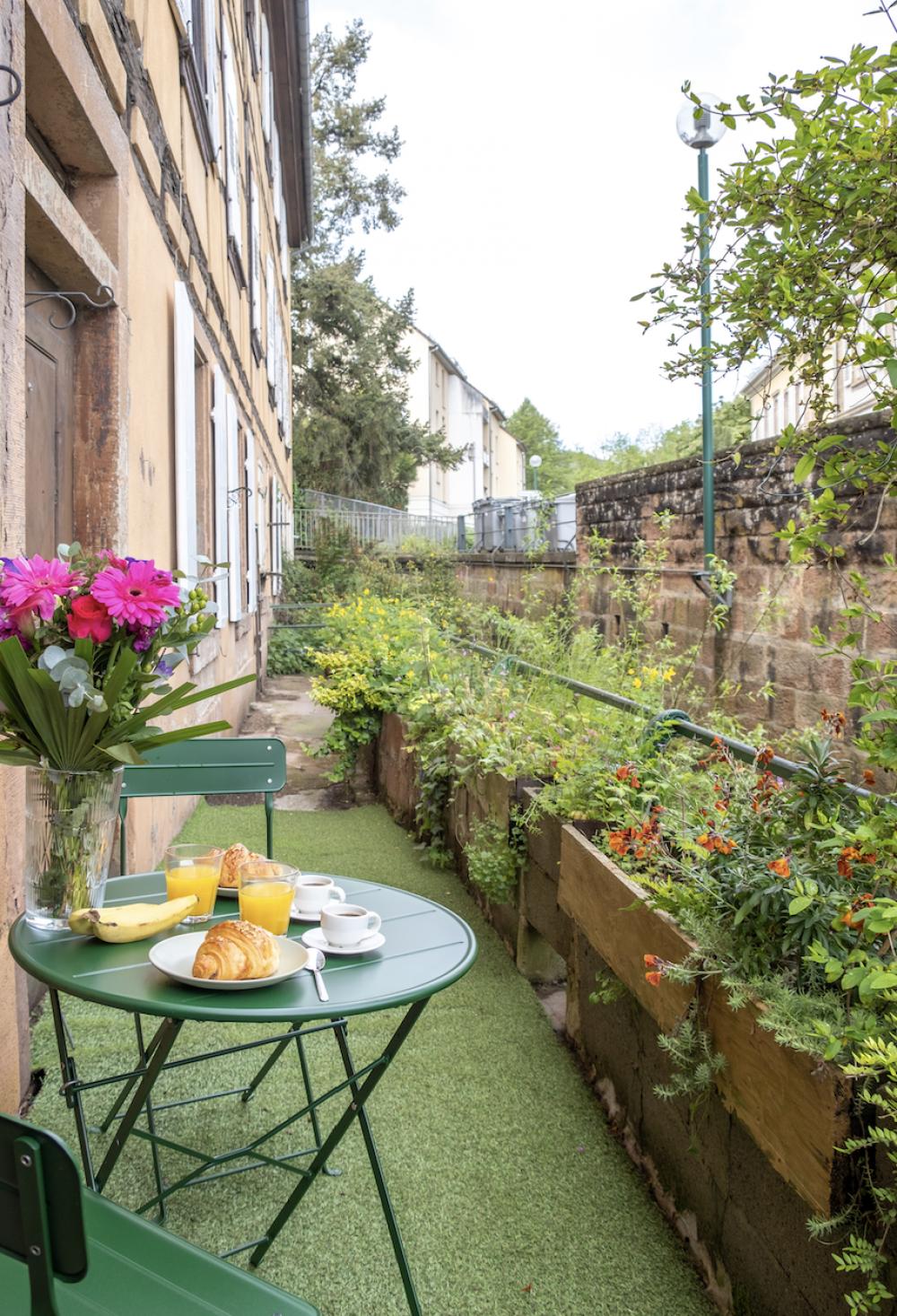
A cozy apartment in the heart of Barr, a charming wine-growing town. It’s also right on our Day 2 itinerary and just 35 minutes from Haut-Koenigsbourg.
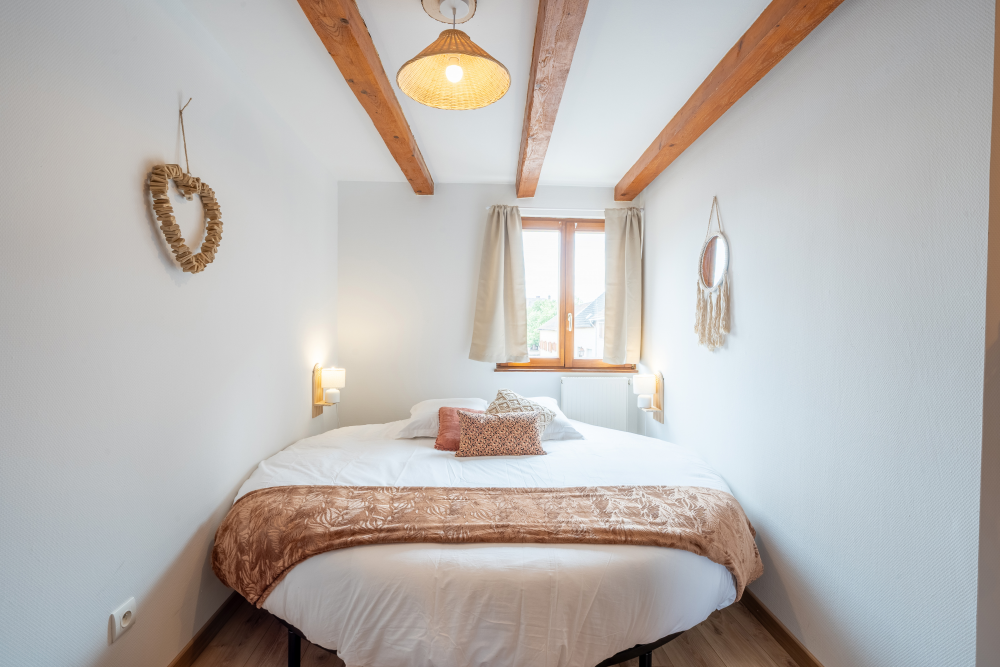
An elegant studio for two, featuring its signature round bed. Sélestat serves as a central hub between the Wine Route and Colmar.
Estimated budget for a 3-day trip to Alsace
Alsace remains an affordable destination, especially when staying in a vacation rental. In fact, staying in a place with a fully equipped kitchen can significantly reduce your dining expenses. Here is our estimate per person (based on two people) to help you plan.
| Expense item | Economical | Comfort |
|---|---|---|
| Accommodation (3 nights) | 105 € | 210 € |
| Food and drinks | 90 € | 165 € |
| Tours and Activities | 30 € | 55 € |
| Transportation / Gasoline | 40 € | 60 € |
| Wine Tastings | 15 € | 40 € |
| Souvenirs and extras | 20 € | 50 € |
| Total per person | 300 € | 580 € |
8 Practical Tips That Make All the Difference
Here are a few tried-and-true tips to help you make the most of your stay. After all, it’s often the little details that make the difference between a good weekend and an unforgettable stay.
- Book your accommodations early. Alsace is very popular from May through December. Therefore, book your accommodations 4 to 6 weeks in advance to get the best selection and rates.
- Get up early to avoid the crowds. Riquewihr and Éguisheim get packed starting at 11 a.m. Before 10 a.m., however, you’ll have them almost all to yourself. That way, your photos will turn out much better.
- Try the local specialties. Don’t leave without sampling tarte flambée, sauerkraut, baeckeoffe, kougelhopf, and Alsatian wines. After all, that’s the very essence of your trip.
- Opt for the smaller roads. Instead of the A35, take the D62 or the D35 through the vineyards. These alternative routes offer magnificent views and pass through charming villages.
- Download maps for offline use. Some forested areas have limited cell service. That’s why it’s best to download Google Maps or Maps.me for offline use before you head out.
- Make sure to keep some cash on hand. Although credit cards are accepted almost everywhere, some small wineries and markets only accept cash. So be sure to withdraw some cash before you arrive in the villages.
- Explore the vineyard trails. Most villages offer marked trails through the vineyards, ranging from 30 minutes to 2 hours. Plus, these free walks offer the best views of the villages.
- Check out the events calendar. Alsace is home to a wide variety of wine festivals, craft markets, and festivals. Be sure to check the local calendar before your trip to plan your itinerary.
Frequently Asked Questions
Here are the answers to the most frequently asked questions about a 3-day trip to Alsace.
Three days is the recommended minimum to see the must-see sights (Strasbourg, the Wine Route, Colmar). However, if you have more time, 5 to 7 days will allow you to explore the region in depth, including northern Alsace (Wissembourg, Niederbronn), southern Alsace (Mulhouse, the Ecomuseum), and the Vosges mountain range.
It’s possible, but it can be a bit of a hassle. Strasbourg and Colmar are both easy to explore on foot and are connected by train. However, the Wine Route and the wine-growing villages are difficult to reach by public transportation. Therefore, we strongly recommend renting a car for days 2 and 3.
Spring (April–June) and fall (September–October) offer the best balance of pleasant weather and moderate crowds. Summer remains hot and very touristy. In addition, the Christmas season (late November through December) is magical thanks to the markets, but expect large crowds.
Expect to spend between €300 and €580 per person for a 3-day trip, including lodging, meals, tours, and transportation. In addition, by choosing accommodations with a kitchen (such as those offered by Nexvisit) and preparing some of your own meals, you can significantly reduce your costs.
Two strategies work well. First, you can choose a central accommodation (between Obernai and Sélestat) from which you can explore the area each day. Second, you can change accommodations every evening to stay as close as possible to your destinations. Nexvisit offers several accommodations ideally located along the route.
The Wine Route stretches 170 km from Marlenheim to Thann. As a result, it’s impossible to cover the entire route in a single day if you want to enjoy it properly. However, our itinerary focuses on the most scenic sections (from Obernai to Éguisheim), which include the most remarkable villages.
Absolutely! The Haut-Koenigsbourg Castle is a real hit with kids, the half-timbered villages spark their imagination, and they absolutely love the theme parks (Orangerie in Strasbourg, NaturOparC, Cigoland, and Montagne des Singes). Plus, Alsatian cuisine is sure to please the whole family. Check out our guide to Alsace with the family.
Of course, this is just a suggestion that you can tailor to your liking. For example, you could switch days 2 and 3, add a stop in Mulhouse (Cité de l’Automobile) or Hunspach, or even spend a whole day wine tasting if that’s your passion.
It depends on your priorities. On the one hand, Strasbourg offers all the comforts of city life (restaurants, entertainment, public transportation). On the other hand, the Wine Route charms visitors with its tranquility and authenticity. To be honest, the best option is to stay somewhere in between (Barr, Zellwiller, Sélestat), which gives you easy access to everything.
A three-day trip to Alsace remains one of the most rewarding ways to explore the region. You’ll get to experience its three main highlights—cities, vineyards, and castles—without wearing yourself out. Plus, each day offers a refreshing change of pace from the one before. In short, you’ll return home feeling as though you’ve taken several trips in one.
To make the most of this adventure, stay at one of our accommodations. That way, you can extend the magic of your trip without having to rush around at the last minute. Plus, booking directly through Nexvisit offers the best value for your money: no commission, and linens and the tourist tax are included.