
The Alsace Wine Route: Complete Guide 2026
Updated in March 2026 — Reading time: 15 min
The Alsace Wine Route: Complete Guide 2026
Updated in March 2026 — Reading time: 15 min
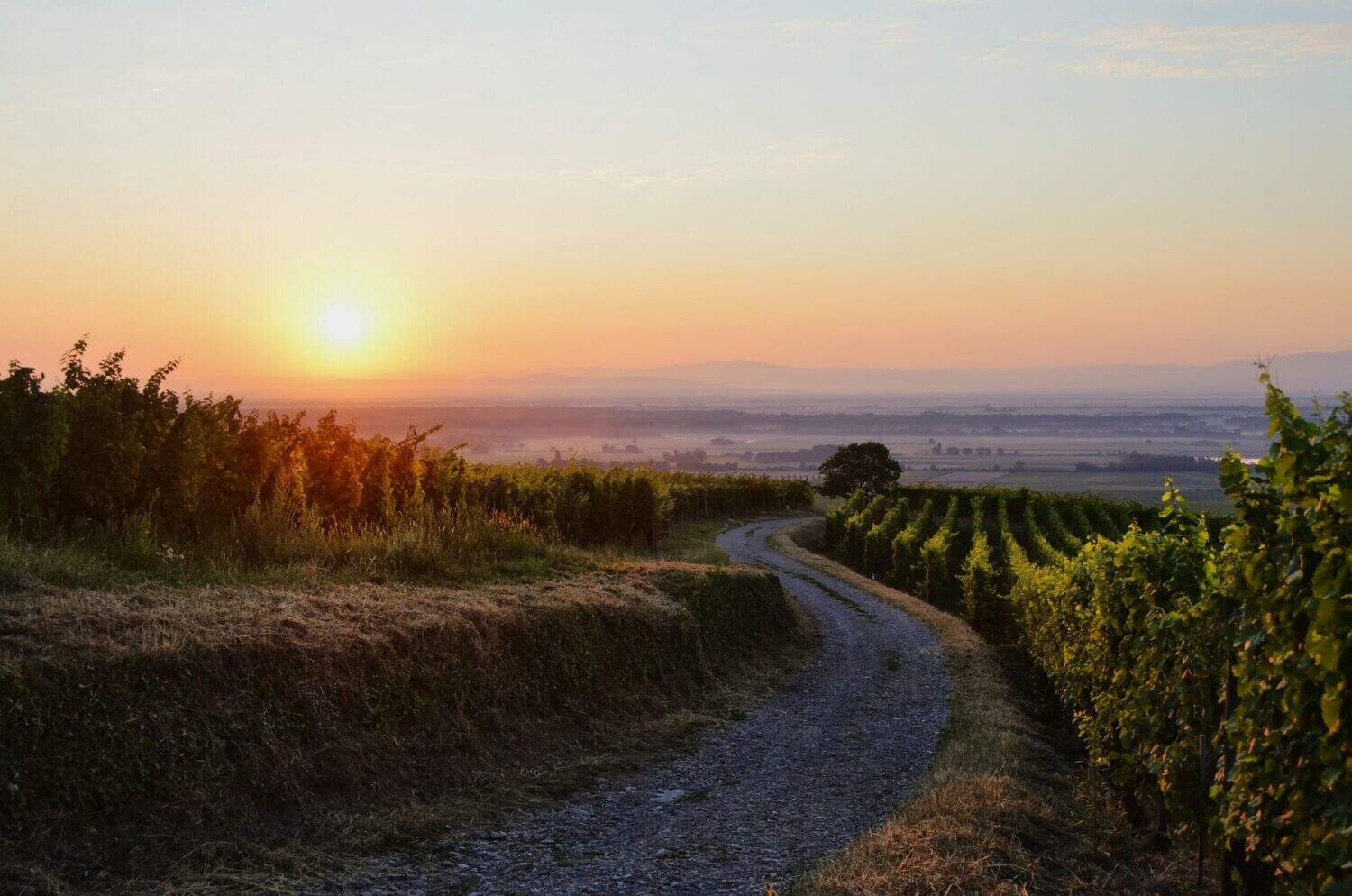
Imagine a 170-kilometer golden ribbon winding its way between the foothills of the Vosges and the Alsace plain. On either side, vineyards stretching as far as the eye can see, medieval villages with flower-adorned half-timbered houses, cozy wine taverns, and cellars where time seems to have stood still. Welcome to the Alsace Wine Route, one of Europe’s oldest and most famous wine routes, inaugurated in 1953.
From Marlenheim in the north to Thann in the south, this route passes through more than 70 wine-growing communities, 51 Grand Cru-classified terroirs, and some of the most beautiful villages in France. Whether you’re a lover of fine wines, a history buff, a hiker, or simply looking for a romantic weekend getaway, the Alsace Wine Route has something to offer you in every season.
This comprehensive guide, updated for 2026, brings together everything you need to know before your trip: must-visit villages, the seven Alsatian grape varieties, local cuisine, activities you won’t want to miss, and, of course, the best Nexvisit accommodations for staying right in the heart of the vineyards.
📋 Table of Contents
🌎 Why visit the Alsace Wine Route?
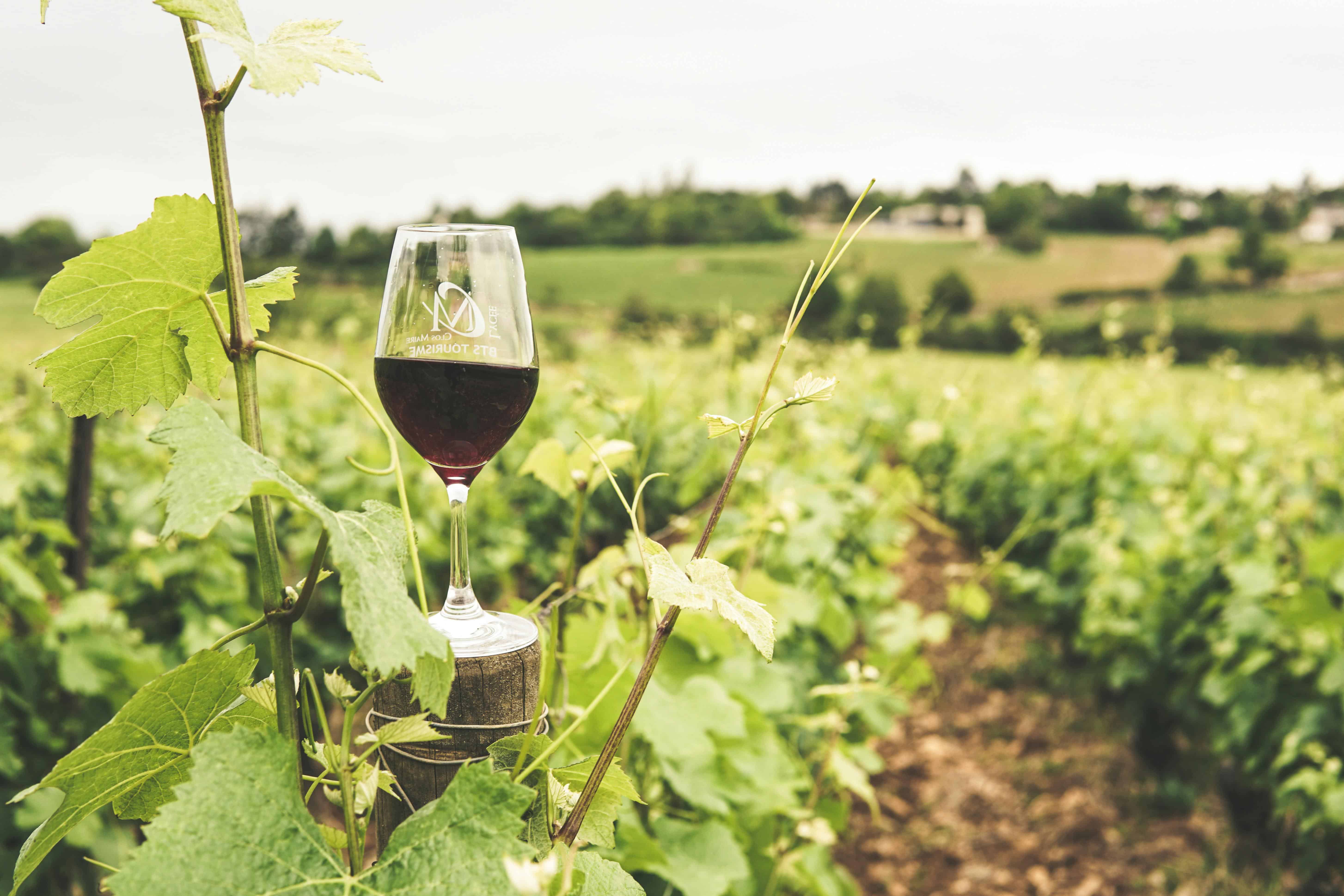
The Alsace Wine Route is not just a tourist route—it’s a complete sensory experience. Here are a few figures that speak for themselves:
What makes the Alsace Wine Route unique compared to the wine routes of Burgundy, Bordeaux, or Tuscany is the exceptional concentration of cultural heritage within a compact area. In just a few kilometers, you’ll go from a village designated as one of the “Most Beautiful Villages of France” to a hilltop castle, and from a tasting of Grand Cru Riesling to a gourmet meal in a century-old winstub.
Alsace is also one of the most welcoming wine regions in France: there are no dress codes at the wineries, no reservations are required for most tastings, and the warm hospitality is legendary. This itinerary is perfect for romantic getaways, family vacations, outings with friends, or solo trips.
Pour planifier votre visite, consultez le site officiel : Route des Vins d’Alsace officielle.
🍷 The 7 Must-Try Grape Varieties of Alsace
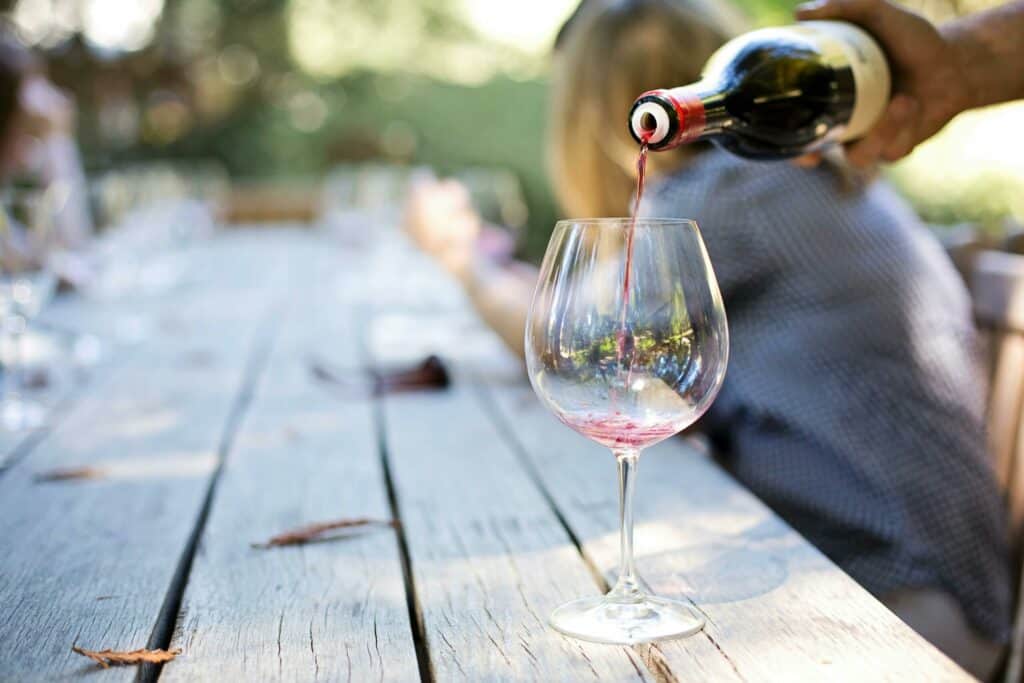
Alsace is one of the few French regions where wines are named after their grape variety rather than their terroir. Of the seven Alsatian grape varieties, four are considered noble: Riesling, Gewürztraminer, Pinot Gris, and Muscat. These are the only varieties authorized for the “Vendanges Tardives” and “Sélections de Grains Nobles” designations. Here are the seven grape varieties you’ll find along the Wine Route, as well as the famous Crémant.
Riesling — The King of Alsace Wines
Notes: Dry and mineral, with citrus and white floral notes; older vintages may have a hint of petrol. Lively and elegant acidity.
Pairs well with: Sauerkraut with vegetables, seafood, grilled fish, and goat cheese.
Gewürztraminer — The Exuberant Noble
Notes: Aromatic and full-bodied, with notes of lychee, rose, mild spices, and exotic fruits. Often slightly sweet.
Pairs well with: Munster cheese, foie gras, spicy Asian cuisine, fruit desserts.
Pinot Gris — The Generous Noble
Notes: Round and full-bodied, with notes of yellow fruit, honey, and smokiness. Beautiful complexity on the palate.
Pairs well with: Baeckeoffe, roasted poultry, mushrooms, soft cheeses.
Muscat d'Alsace — The Noble Crunch
Notes: Dry and fresh, unlike the Muscats from the south; crisp, fresh grapes; elderflower; citrus.
Pairing: Perfect as an aperitif, with Alsatian asparagus, fresh salads, and kugelhopf.
Pinot Blanc — The All-Purpose Wine
Notes: Smooth and well-balanced, with notes of green apple and white flowers, and a slight bitterness on the finish. Fresh and refreshing.
Pairs well with: Flammkuchen, quiche lorraine, freshwater fish, cold cuts.
Sylvaner — The Unassuming One
Notes: Light and vegetal, with hints of fresh grass, lemon, and subtle floral notes. Pleasant liveliness.
Pairs well with: Seafood, snails, summer salads, fish sauerkraut.
Pinot Noir — The One and Only Red
Notes: The only red (and rosé) wine from Alsace. Cherry, raspberry, and mild spices. Increasingly structured thanks to barrel aging.
Pairs well with: Game, grilled red meats, coq au Riesling (and yes, coq au Pinot Noir too!), aged cheeses.
Crémant d’Alsace — Festive bubbles
Notes: Traditional method, fine bubbles, apple, brioche, citrus. France’s top-selling Crémant by volume.
Pairing: Aperitifs, pretzels, light desserts—perfect for any occasion.
To learn more about Alsatian grape varieties, visit Vins d’Alsace, the official website of the Conseil Interprofessionnel des Vins d’Alsace.
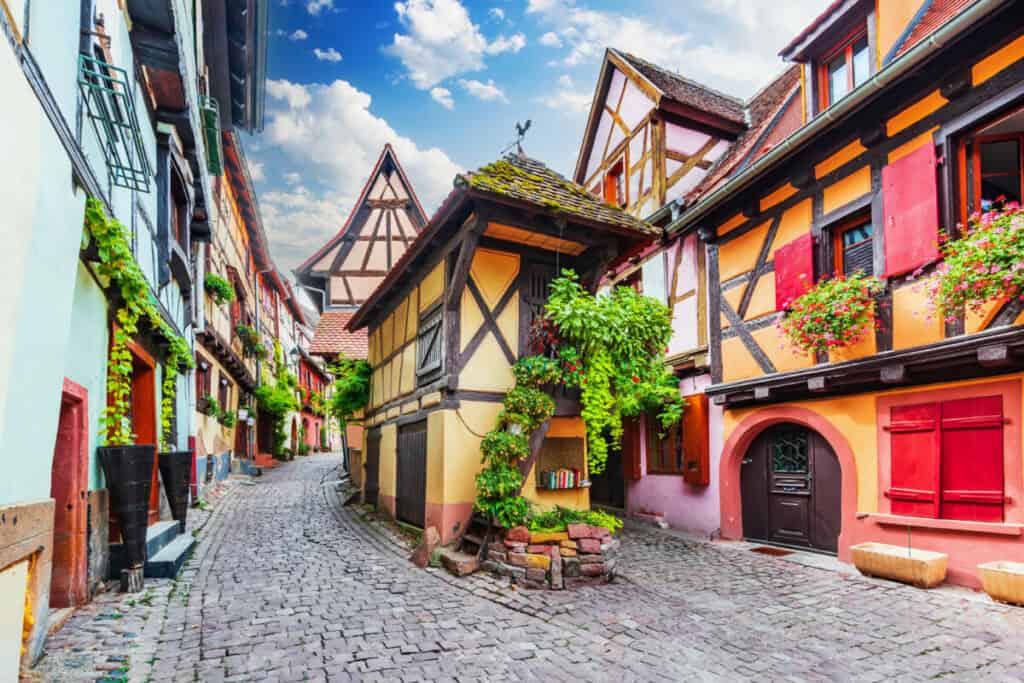
Among the dozens of towns and villages along the Wine Route, these eight are well worth a longer stop. Each has a strong identity and its own unique charm.
1. Riquewihr — The Medieval Gem
Listed among the Most Beautiful Villages of France, Riquewihr offers a true journey back in time. Its 13th-century ramparts enclose a maze of cobblestone streets lined with pastel-colored half-timbered houses. The village is renowned for its Schoenenbourg and Sporen Grand Cru Rieslings, among the most prestigious in Alsace. Stroll down the main street, admire the Thieves’ Tower (Dolder), and finish with a tasting at one of the many open cellars. In both summer and winter, during its famous Christmas market, Riquewihr offers an enchanting spectacle.
2. Kaysersberg — The Town of Albert Schweitzer
The birthplace of Nobel Peace Prize laureate Albert Schweitzer, Kaysersberg embodies the very best of Alsace. Its 15th-century fortified bridge, Renaissance houses, and the ruins of its imperial castle create a picture-perfect setting. The village was voted France’s Favorite Village in 2017. Its Schlossberg and Kaefferkopf Grand Crus are among the finest terroirs in Alsace. The Kaysersberg Christmas market, one of the most authentic in the region, takes place every weekend during Advent in an intimate and magical atmosphere.
3. Eguisheim — The circular village
Voted France’s Favorite Village in 2013, Eguisheim captivates visitors with its unique layout of concentric circles surrounding the Counts’ Castle. Considered the birthplace of Alsatian viticulture, the village is home to three Grand Crus (Eichberg, Pfersigberg, Hatschbourg) and a multitude of passionate winemakers. A stroll along the Ronde des remparts offers a succession of flower-adorned facades that are absolutely photogenic. Don’t miss the Saint-Léon fountain in the center of the Place du Château, and treat yourself to a glass of Gewurztraminer at sunset.
4. Colmar — The Wine Capital of Alsace
Colmar is the beating heart of the Alsace Wine Route. Its “Little Venice,” traversed by the Lauch River, is one of the most photographed neighborhoods in France. The Unterlinden Museum houses the famous Issenheim Altarpiece, a masterpiece of Gothic art. Colmar is also the hometown of Auguste Bartholdi, creator of the Statue of Liberty. The Tanners’ Quarter, the Maison des Têtes, and the Saint-Martin Collegiate Church are all worth a visit. In August, the Colmar Wine Fair attracts over 300,000 visitors with its tastings and concerts. For a stay in nearby Bas-Rhin, check out our guide to vacation rentals in Bas-Rhin.
5. Ribeauvillé — The City of Minstrels
Dominated by the silhouettes of its three castles (Saint-Ulrich, Girsberg, and Haut-Ribeaupierre), Ribeauvillé is a major stop on the Wine Route. The Grand’Rue offers an exceptional stroll past bay-windowed houses, Renaissance fountains, and wrought-iron signs. Every first Sunday in September, the Pfifferdaj (minstrels’ festival), the oldest festival in Alsace, brings the town to life with costumed parades and a fountain of free wine. The Geisberg, Kirchberg, and Osterberg Grand Crus produce remarkable Rieslings suitable for aging.
6. Obernai — The Pearl of the Foothills
The second most visited town in Alsace after Strasbourg, Obernai charms visitors with its picturesque market square surrounded by half-timbered houses, its bell tower (Kapellturm), and its grain market. The town is the ideal starting point for an excursion to Mont Sainte-Odile, a major pilgrimage site and an exceptional viewpoint overlooking the Alsace plain. The surrounding vineyards, notably the Clos de la Finkwiller, produce excellent Pinot Gris and Riesling. To explore this part of Alsace further, read our article on what to do in Strasbourg over a weekend.
7. Barr — The northern gate of the vineyard
Barr marks the northern entrance to the most renowned section of the Wine Route. This wine-growing village is home to the Kirchberg de Barr Grand Cru, one of Alsace’s oldest terroirs, as well as the Zotzenberg Grand Cru, the only Grand Cru authorized for Sylvaner. Every October, the Barr Harvest Festival celebrates the end of the harvest with parades of flower-covered floats and tastings at all the village’s wineries. The Renaissance-style town hall and the Folie Marco, an elegant 18th-century bourgeois residence, are well worth a visit. To stay in the heart of this charming village, discover our accommodation , L’Escapade Alsacienne in Barr.
8. Sélestat — A Humanist Gem
Sélestat is an often-overlooked town that holds unique treasures. Its Humanist Library, listed onUNESCO’s Memory of the World Register, houses exceptional manuscripts from the 15th and 16th centuries. Just a few minutes away, the majestic Haut-Koenigsbourg Castle, restored by Wilhelm II in 1908, offers breathtaking views of the Alsace plain and the Vosges Mountains. Sélestat is also an excellent base for exploring the Wine Route, halfway between Colmar and Strasbourg. For your stay, we recommend our Le Céleste studio in Sélestat. More information about the region: Sélestat Haut-Koenigsbourg Tourism.
🏋 What to do on the Alsace Wine Route?
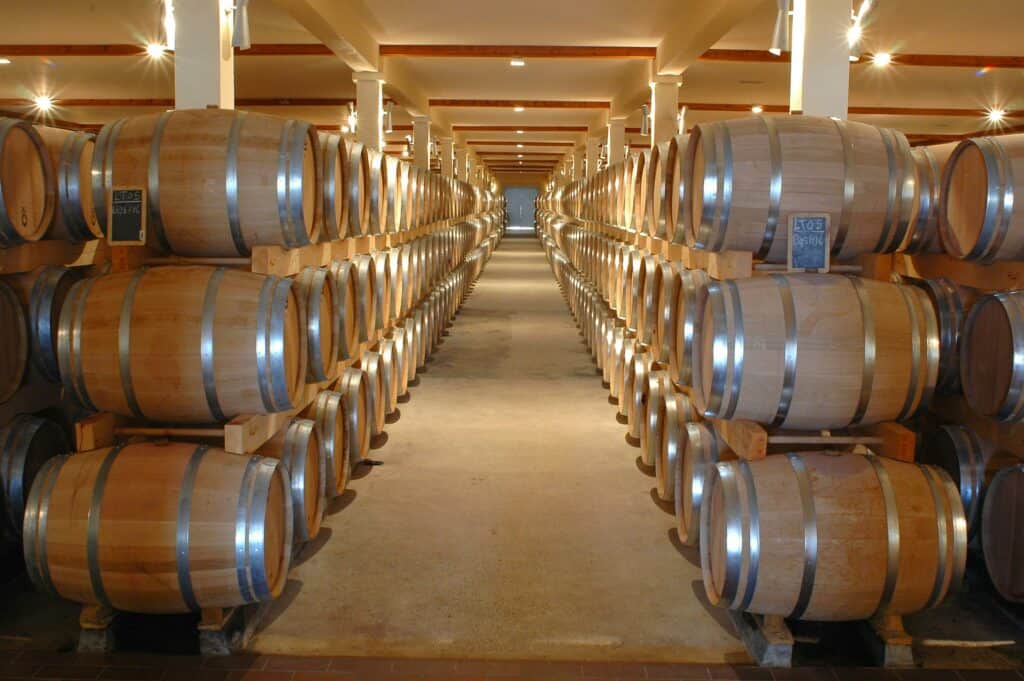
The Alsace Wine Route is about more than just wine tastings. Here are the must-do activities to plan for your stay.
Wine tastings and cellar tours
This is, of course, the main attraction. Most Alsatian winemakers open their cellars to the public without an appointment and offer free or low-cost tastings. From small family-run estates to historic houses (Hugel, Trimbach, Zind-Humbrecht, Weinbach), every visit is an opportunity to learn about the terroirs and winemaking methods. Don’t hesitate to venture off the beaten path: there are an increasing number of organic and biodynamic winemakers in Alsace.
The Strasbourg Hospices Wine Cellar — The World's Oldest Wine
Founded in 1395, the historic wine cellar of the Hospices de Strasbourg is one of the oldest active wine cellars in the world. It houses a white wine from 1472 —the oldest barrel-aged wine still in existence in the world. Preserved as a historical artifact, this exceptional wine has been tasted only three times in over 500 years, including once in 1944 during the liberation of Strasbourg. It has been transferred to a new barrel only three times in its history to ensure its preservation. Today, it is preserved as a heritage relic. A guided tour with a tasting of current vintages offers a journey through six centuries of Alsatian wine history.
The Alsace Wine Country Bike Route
Stretching 140 km, the Véloroute du Vignoble (EuroVelo 5) lets you explore the Wine Route by bike on safe, well-marked bike paths. The route, which is mostly flat or gently sloping, is suitable for families and casual cyclists. Electric bike rentals are available in every stop along the way. Allow 3 to 5 days to complete the entire route, with culinary highlights at every stop.
Hiking and castles
The Vosges Mountains, which border the vineyards, offer a dense network of trails marked by the Club Vosgien. Among the most popular hikes are the ascent to Haut-Koenigsbourg from Saint-Hippolyte, the Three Castles Trail in Ribeauvillé, the loop around Mont Sainte-Odile, and the Eguisheim Grand Crus Wine Trail. The panoramic views of the vineyards from the heights are spectacular, especially in the fall when the vines are ablaze with gold and crimson.
Colmar Wine Fair (August 2026)
Every summer, Alsace’s largest wine event brings together more than 300 exhibitors and 300,000 visitors over a ten-day period. Wine tastings, workshops, culinary experiences, and concerts set the tone for the evenings. The 2026 edition will take place in August at the Colmar Exhibition Center.
SlowUp Alsace — June 7, 2026
A festive, family-friendly event, SlowUp Alsace features a 38-km route through the vineyards between Colmar and Rouffach that is completely closed to cars. Whether you’re biking, rollerblading, scootering, or running, everyone can go at their own pace. The route is dotted with activities, tastings, and food stands. See you on June 7, 2026, for this unforgettable day. Information and registration: SlowUp Alsace.
Farmers' markets and Christmas markets
Tout au long de l’année, les marchés fermiers permettent de dénicher miel, confitures, munster fermier, saucisses artisanales et bien sûr du vin directement chez le producteur. De fin novembre à fin décembre, les marchés de Noël d’Alsace transforment chaque village en scène de conte de fées. Strasbourg, Colmar, Kaysersberg, Riquewihr, Eguisheim : chaque marché a sa personnalité. Lisez notre guide complet : Où se loger pour les marchés de Noël d’Alsace.
How to get there
By car: The A35 highway runs along the Alsace Plain and provides access to all the villages along the Wine Route. From Paris, the trip takes about 4.5 hours (480 km). From Lyon, about 4 hours (440 km). From Germany (Freiburg), less than an hour.
By train: The TGV connects Paris to Strasbourg in 1 hour and 46 minutes and to Colmar in 2 hours and 20 minutes. From the Strasbourg or Colmar train station, TER lines serve the main towns in the wine region (Obernai, Sélestat, Barr, Ribeauvillé). To explore the northern region, check out our guide to things to do in Strasbourg.
By plane: Strasbourg-Entzheim Airport is 25 minutes from downtown. EuroAirport Basel-Mulhouse-Freiburg, to the south, is an attractive alternative for accessing the southern part of the Wine Route.
Getting Around on the Wine Route
By car: The most flexible way to explore the Wine Route at your own pace. The roads are well-maintained, and parking is generally free in the villages (paid parking in Colmar).
By bike: The Véloroute du Vignoble is clearly marked. Electric bike rentals are available in Colmar, Sélestat, Obernai, and at most tourist offices.
By bus: Tourist shuttles run during the season between the main villages, notably the Colmar-Kaysersberg-Riquewihr route. Check Visit Alsace for updated schedules.
Estimated budget
For a two-night weekend on the Alsace Wine Route, expect to spend approximately:
• Accommodation: €60–€120 per night (Nexvisit accommodations, tourist tax included)
• Meals: €15 to €35 per person (winstub or restaurant)
• Tastings: free to €10 per winery
• Activities: €5 to €15 (castle tours, bike rentals)
That’s about €200 to €400 per person for a full weekend, excluding transportation.
Tip: Book in advance
The busiest times of year are the grape harvest (September–October) and the Christmas markets (November–December). We recommend booking your accommodation at least 2 to 3 months in advance for these periods. Book your accommodation on Nexvisit →
❓ Frequently Asked Questions (FAQ)
Ready to explore the Alsace Wine Route?
The Alsace Wine Route is much more than just a tourist route: it’s an invitation to slow down, to savor every moment, every glass, and every village. Whether you come for the golden grape harvest in September, the magic of the Christmas markets, or the mildness of spring, the wine-growing region of Alsace welcomes you with unparalleled warmth and generosity.
Book your accommodation with Nexvisit today and experience the Wine Route like a local. No commission, no tourist tax, and 100% secure payment.
🍷 Cheers!
Book my accommodation on Nexvisit →© 2026 Nexvisit — Vacation Rentals in Alsace. All rights reserved.